ZAGA Zygomatic Implants: The Anatomy-Guided Approach Explained
 Hospitaprime8 min read
Medically reviewed by Dr. Eren Pera
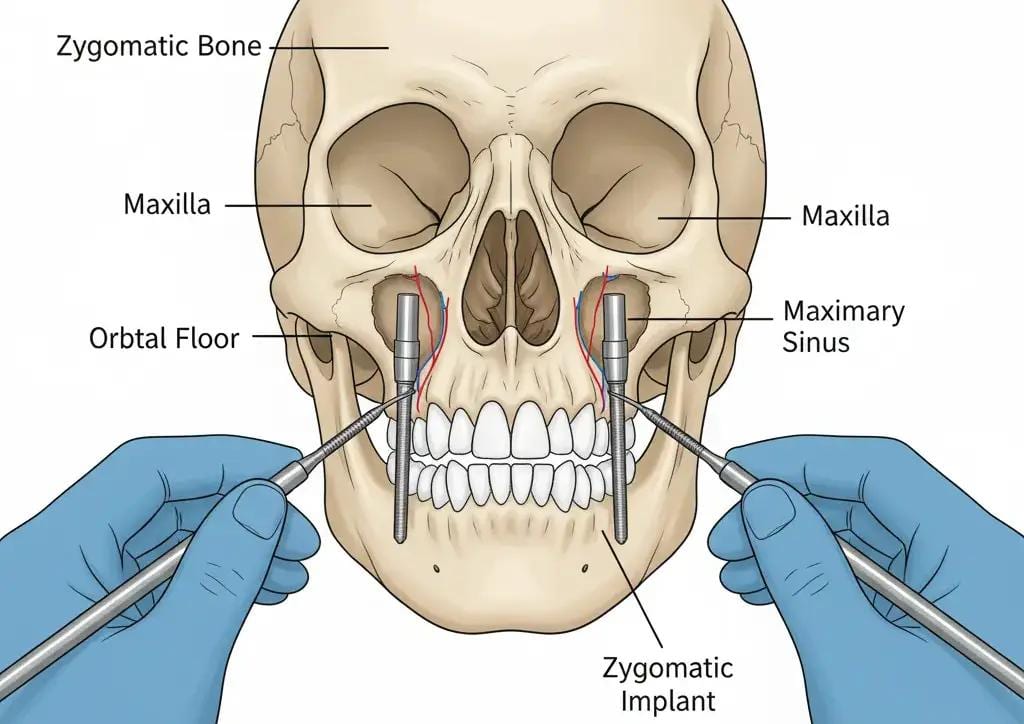
ZAGA zygomatic implants are zygomatic implants planned and placed with the Zygoma Anatomy-Guided Approach (ZAGA): the path of each implant follows the patient’s own upper-jaw and cheekbone anatomy, rather than one standard path through the sinus. At Hospitaprime, Turkey’s first certified ZAGA Center, Dr. Eren Pera plans every zygomatic implant this way on a 3D CBCT scan.
Key facts
- ZAGA stands for Zygoma Anatomy-Guided Approach. It is a concept for zygomatic implants, not an implant brand.
- A zygomatic implant is a long implant (about 30–55 mm) anchored in the cheekbone (zygoma) when the upper jaw has too little bone for regular implants.
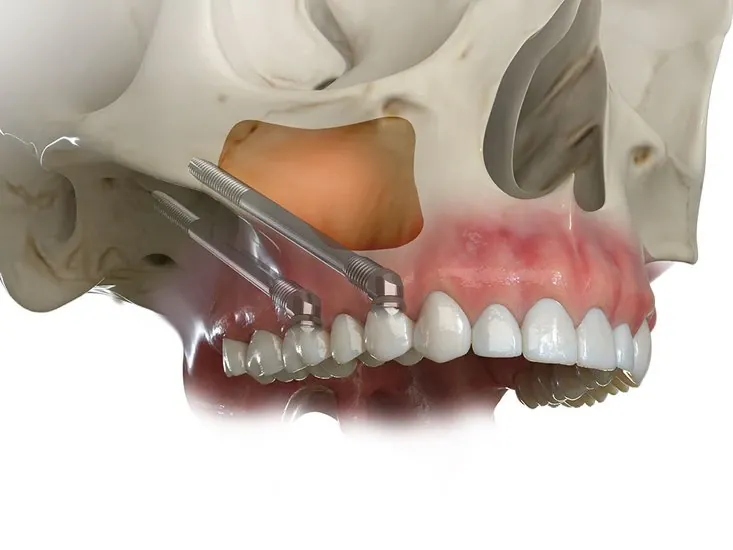
- In the classic technique, the implant usually runs through the maxillary sinus along a similar path in every patient. With ZAGA, the path is chosen for each patient: it can pass through the sinus, partly through the sinus wall, or stay completely outside it.
- The aim is for the implant to come out where the new teeth need it, which can make the bridge less bulky and easier to clean.
- Hospitaprime, led by oral and maxillofacial surgeon Dr. Eren Pera, has been certified by ZAGA Centers since 2024 and is part of the global ZAGA Network.
- ZAGA does not remove the risks of zygomatic surgery. Sinus problems, infection, numbness and implant failure are still possible.
What does “zygoma anatomy-guided approach” mean?
It means that anatomy, not a fixed surgical routine, decides where the implant goes. When the upper jaw loses bone, it does not shrink the same way in every person. The front wall of the maxillary sinus may be flat in one patient and strongly curved (concave) in another, and the remaining ridge of bone where the teeth used to be may be wide, narrow or almost gone.
The ZAGA concept starts from two fixed points: where the implant must anchor in the cheekbone, and where the implant head should come out at the ridge so the new teeth sit in the right place. The path between those points is then planned around the shape of the sinus wall and the ridge. The goal is solid bone contact at the cheekbone and, where possible, at the ridge as well, while protecting the sinus lining.
How are ZAGA zygomatic implants different from the classic technique?
The original zygomatic technique was designed to work in a broad range of patients with a largely standard path: the implant enters the palate side of the ridge, passes through the sinus and anchors in the cheekbone. It made fixed teeth possible for many people who had been told they had no bone. Its known drawbacks are that the implant head often sits towards the palate, so the bridge can be wider and bulkier on the inside, and the sinus is crossed in every case.
ZAGA kept the anchorage in the cheekbone but changed how the path is chosen.
| Classic zygomatic technique | ZAGA (anatomy-guided) | |
|---|---|---|
| How the path is chosen | Largely the same path for most patients | Planned for each patient from the CBCT |
| Relation to the sinus | Implant body usually inside the sinus | Inside, partly through the wall, or fully outside the sinus, depending on anatomy |
| Where the implant head comes out | Often towards the palate | Aimed at the ridge, where the teeth need it |
| Effect on the bridge | Can be bulkier on the palate side | Usually allows a slimmer bridge |
| Planning | 2D or 3D imaging | 3D CBCT planning is central to the method |
| Anchorage | Cheekbone | Cheekbone |
Both are recognised techniques. The right choice of path is always a surgical decision for the individual patient.
What are the ZAGA zygoma types 0 to 4?
The ZAGA concept describes the relationship between the implant path and the jaw in five types, from ZAGA 0 to ZAGA 4. In very simple terms:
- ZAGA 0: the front wall of the sinus is fairly flat; the implant body runs mostly inside the sinus.
- ZAGA 1 and 2: the wall is more curved; the implant passes partly through the bone of the sinus wall.
- ZAGA 3: the wall is strongly curved; most of the implant body runs outside the sinus.
- ZAGA 4: bone loss is very advanced; the implant runs completely outside the sinus and the jaw.
These types are not grades of quality. They describe the anatomy and help the surgical team choose the safest, most stable route and plan the bridge.
Why does the implant path matter for patients?
The path is not only a technical detail. It affects things you notice every day after treatment:
- Comfort and speech. A bridge that is not bulky on the palate side tends to feel more natural to the tongue.
- Cleaning. A slimmer bridge whose screw channels sit where the teeth are is usually easier to clean, and cleaning matters for the long-term health of the gum around the implants.
- The sinus. Sinusitis is one of the known complications of zygomatic implants. Our zygomatic implant page cites pooled data showing sinusitis in about 4.4% of anatomy-guided cases compared with 9.5% with the older standard path. These are averages from studies, not a promise for any one patient.
- Stability. Planning the implant to touch bone at both ends, where anatomy allows, supports a stable result.
What are ZAGA Centers, and what does certification mean?
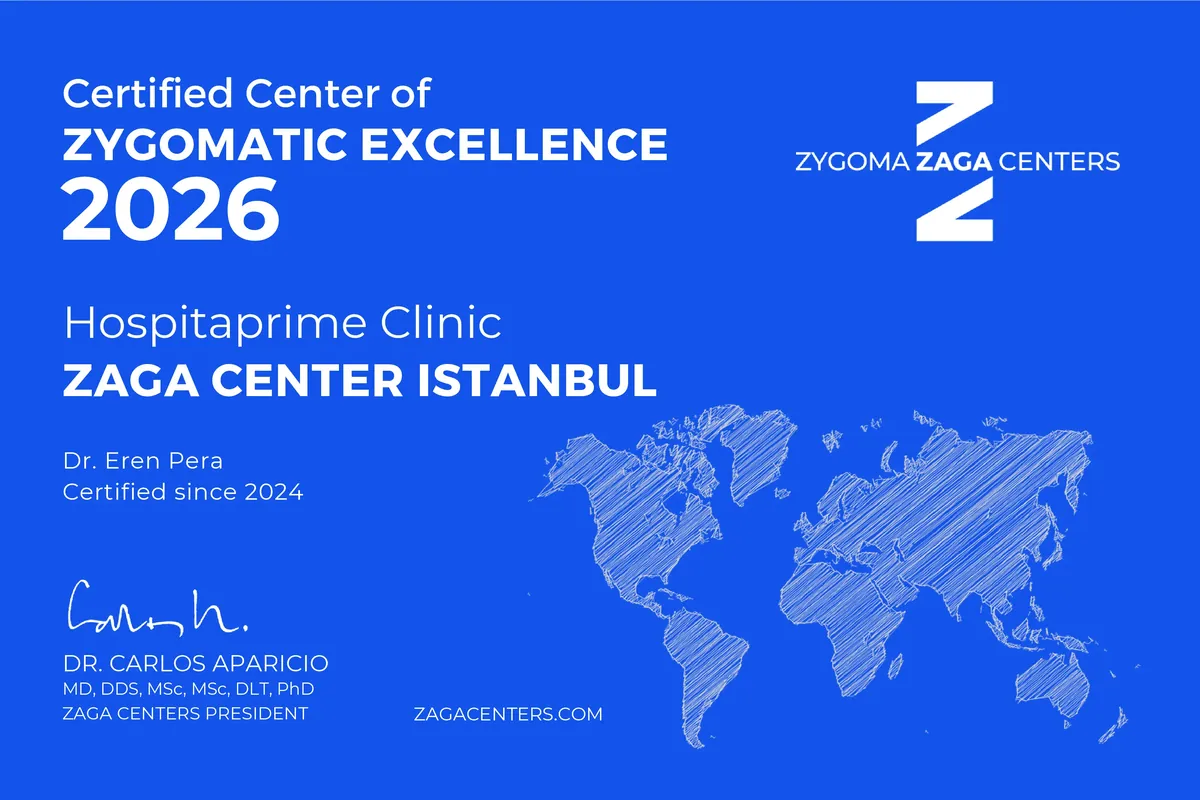
ZAGA Centers is an international network of clinics that work with the ZAGA protocol for patients with severe upper-jaw bone loss. Hospitaprime has been certified by ZAGA Centers since 2024 and is Turkey’s first certified ZAGA Center, also called ZAGA Center Istanbul. The certificate on display reads “Certified Center of Zygomatic Excellence 2026”.
For you as a patient, this means three practical things:
- One protocol. Zygomatic implants at Hospitaprime are planned with the ZAGA protocol, around your own cheekbone and sinus anatomy.
- A named surgeon. The treatment is planned and performed by Dr. Eren Pera, an oral and maxillofacial surgeon (DDS, OMFS) trained at Hacettepe University and Ankara University. You can read more on Dr. Eren Pera’s profile.
- A network after you go home. Follow-up continues with us online, and where available you can also be seen at a ZAGA Center in your own country.
Certification describes how a clinic works. It does not guarantee a result, and every case still needs its own examination and plan.
How is a ZAGA treatment planned at Hospitaprime?
Planning starts before you travel. You send a CBCT scan or a panoramic X-ray, and Dr. Pera reviews how much bone you have and whether zygomatic implants are an option. If they are, each implant’s path is mapped on your CBCT: where it anchors in the cheekbone, how it relates to the sinus and where it will come out at the ridge. The plan also decides whether you need zygomatic implants only, or a combination with regular or pterygoid implants.
The surgery is done under local anaesthesia, with sedation if you prefer, and usually takes about 2–3 hours. If your case is suitable, fixed temporary teeth are attached soon after surgery. The final bridge follows on a second visit about 3–4 months later, once healing allows. The full process is explained on our zygomatic implants page.
How do you choose a zygomatic implant surgeon and clinic?
Zygomatic implants are advanced surgery, so the surgeon and the clinic matter as much as the technique. Useful questions to ask any zygomatic implant clinic:
- Who operates? Ask for the surgeon’s name and training. Zygomatic implants are placed by oral and maxillofacial surgeons.
- Is the plan made on a CBCT? A 3D scan is needed to plan each implant path around the sinus and the cheekbone.
- Which protocol is followed? A ZAGA-certified clinic works with the anatomy-guided protocol.
- Are the risks explained in writing? You should know the possible complications before you book.
- What happens if something goes wrong after you fly home? Ask how follow-up, repairs and revision are organised.
What are the risks, even with ZAGA?
Zygomatic implant surgery is specialised surgery, and an anatomy-guided plan reduces some risks but does not remove them. Possible problems include sinusitis, infection or irritation of the gum around the implant, temporary numbness of the cheek or lip, swelling and bruising around the cheek and eye, an opening between the mouth and the sinus that needs a small correction, and, rarely, an implant that does not integrate. Smoking and poor oral hygiene increase the risk of infection and failure. Our article on what can go wrong with zygomatic implants covers this in more detail, and Dr. Pera explains your individual risks before treatment.
Frequently asked questions
What does ZAGA stand for?
ZAGA stands for Zygoma Anatomy-Guided Approach. It is a concept for planning and placing zygomatic implants so that each implant’s path follows the patient’s own anatomy.
Are ZAGA implants a special type of implant?
No. “ZAGA implants” is a common name, but ZAGA is a planning and surgical concept, not a product. It describes how the path of a zygomatic implant is chosen, whichever approved implant system is used.
Do ZAGA zygomatic implants always avoid the sinus?
No. Depending on your anatomy, the implant may pass through the sinus, partly through its wall, or stay fully outside it. The point of ZAGA is that the path is chosen for you, not that the sinus is always avoided.
Is ZAGA better than the classic technique for everyone?
Not automatically. Both are recognised techniques. ZAGA aims to match the path to each patient’s anatomy, and studies report fewer sinus problems on average, but the right plan depends on your scan and an examination by a maxillofacial surgeon.
What does “Turkey’s first certified ZAGA Center” mean?
It means Hospitaprime was the first clinic in Turkey to be certified by ZAGA Centers, in 2024. Zygomatic implants here are planned with the ZAGA protocol, and the clinic is part of the global ZAGA Network.
Can I be followed up in my own country after ZAGA treatment?
Yes. Follow-up continues with Hospitaprime online, and where a ZAGA Center is available in your country you can also be seen there.
Ask Dr. Eren Pera
Were you told you have too little bone for implants? Send your CBCT or panoramic X-ray on WhatsApp (+90 541 855 89 95) or through the contact form, and Dr. Eren Pera’s team will reply in writing with your options. How online, video and in-person consultations work is explained on our consultation details page.
More from our blog
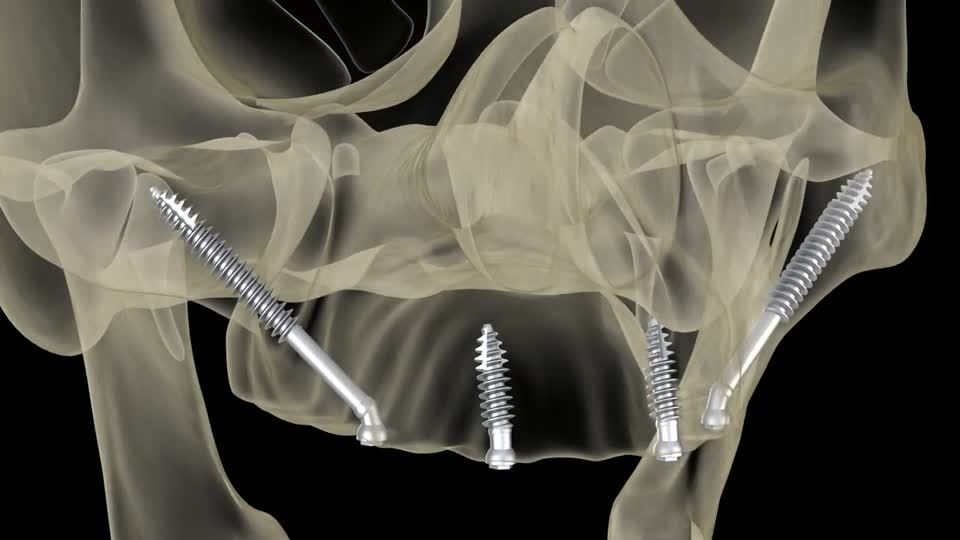 Pterygoid Implants vs Zygomatic Implants: Which One and When?Both avoid bone grafting in the upper jaw, but they anchor in different bones and solve different problems. A side-by-side comparison of pterygoid and zygomatic implants.Read more →
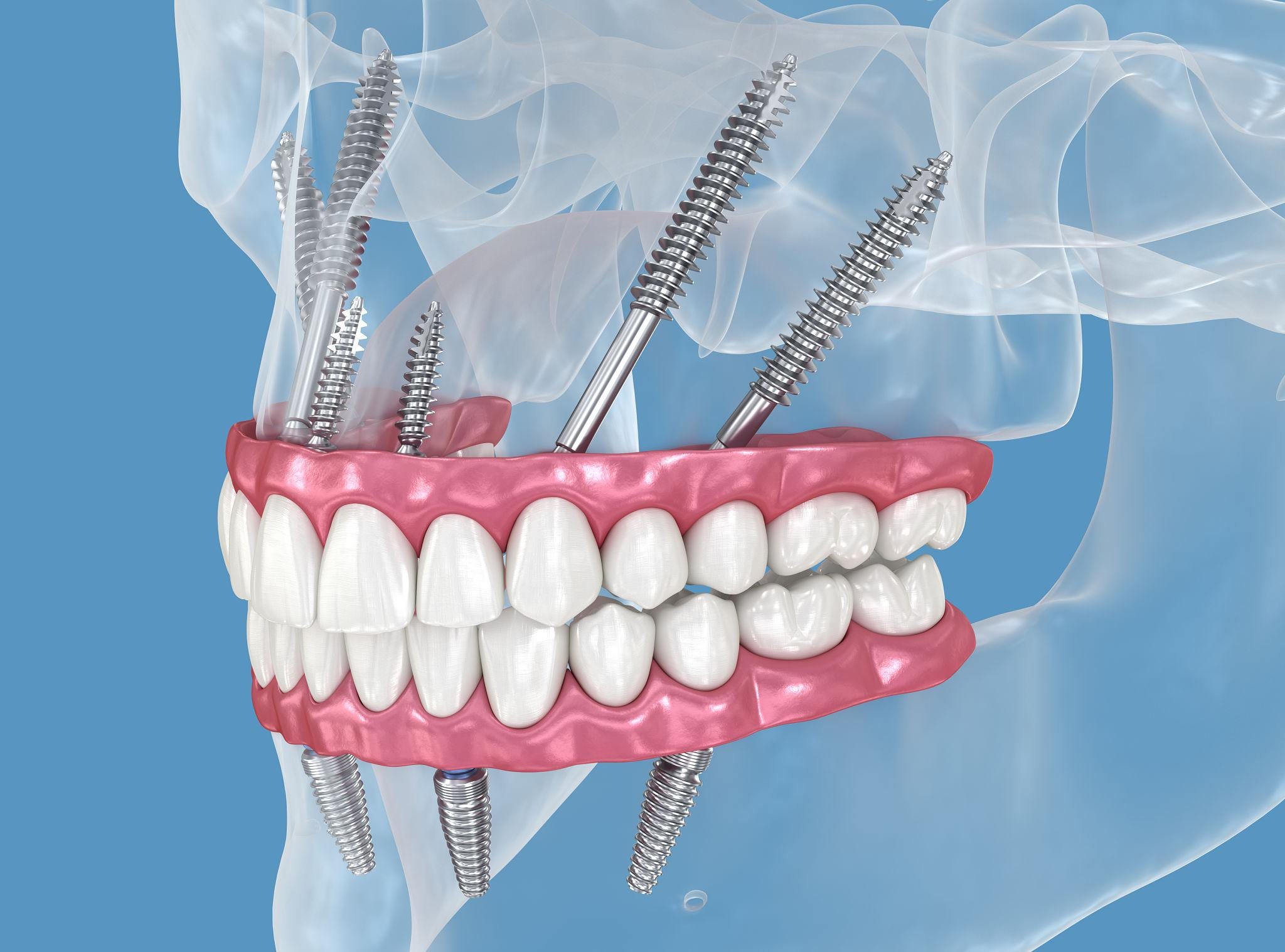 Quad Zygoma Implants: Who Needs Four Zygomatic Implants?Quad zygoma means four zygomatic implants, two in each cheekbone, carrying a fixed upper bridge when the whole upper jaw has lost bone. Who it is for, how it works, recovery and the alternatives.Read more →
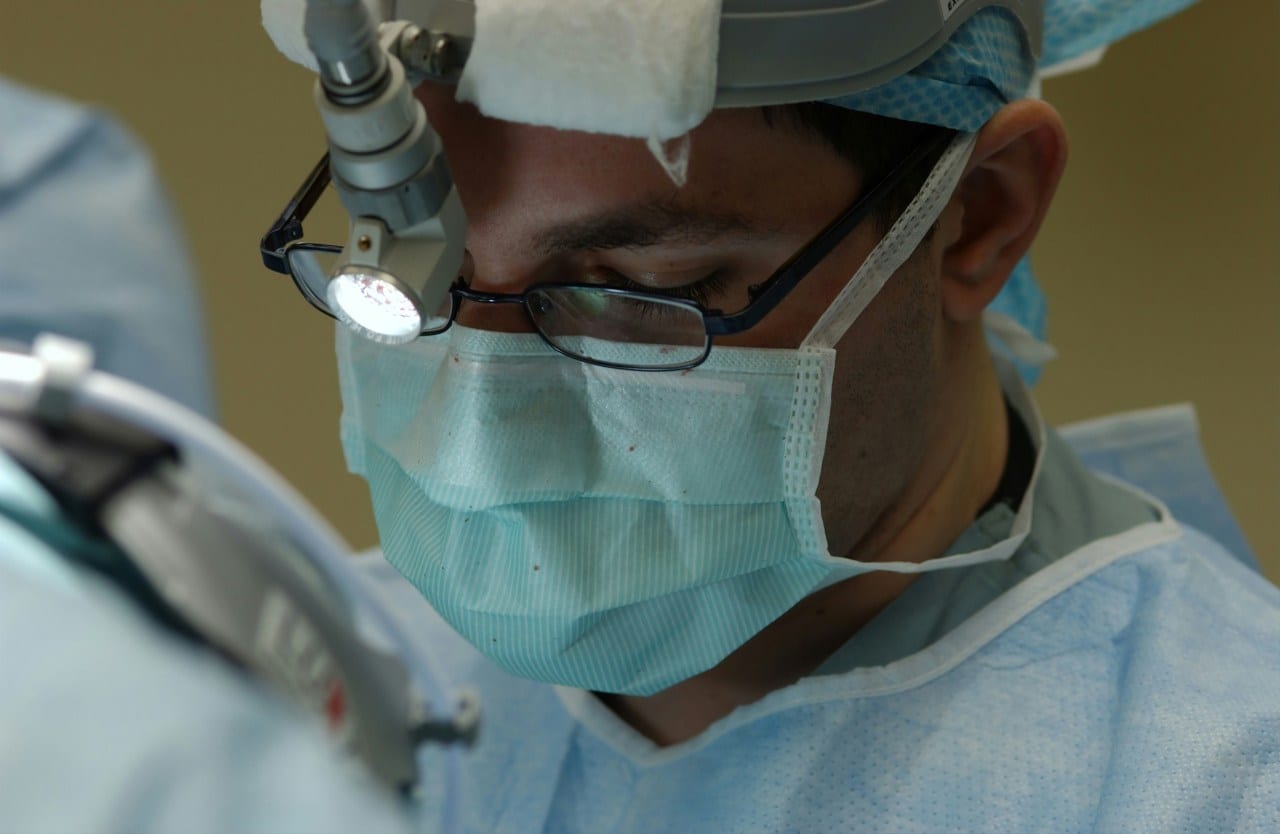 What Is a Zygomatic Implant? | 2026Quick Answer A zygomatic implant is a long dental implant (30–55 mm) that anchors into the cheekbone instead of the jawbone. It is designed for patients with severe upper jaw bone loss wRead more →
Get a Free Written Consultation
Tell us a little about what you need. Dr. Eren Pera’s team replies with a written plan and price.