Pterygoid Implants vs Zygomatic Implants: Which One and When?
 Hospitaprime6 min read
Medically reviewed by Dr. Eren Pera
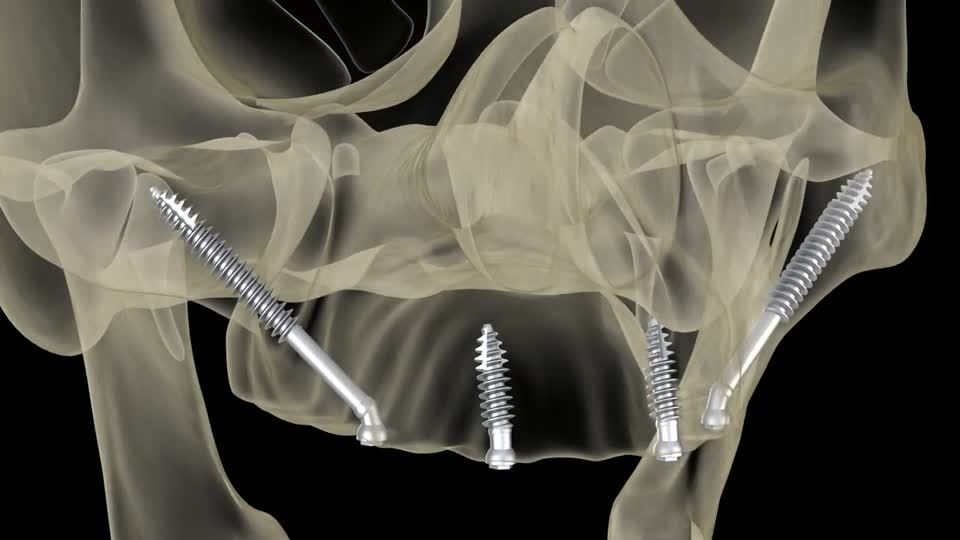
Pterygoid implants and zygomatic implants are both used when the upper jaw lacks bone for regular implants. Pterygoid implants anchor in dense bone behind the upper jaw and mainly replace a sinus lift at the back of the mouth. Zygomatic implants anchor in the cheekbone and are used when bone loss is more extensive. The best plan often combines them.
Key facts
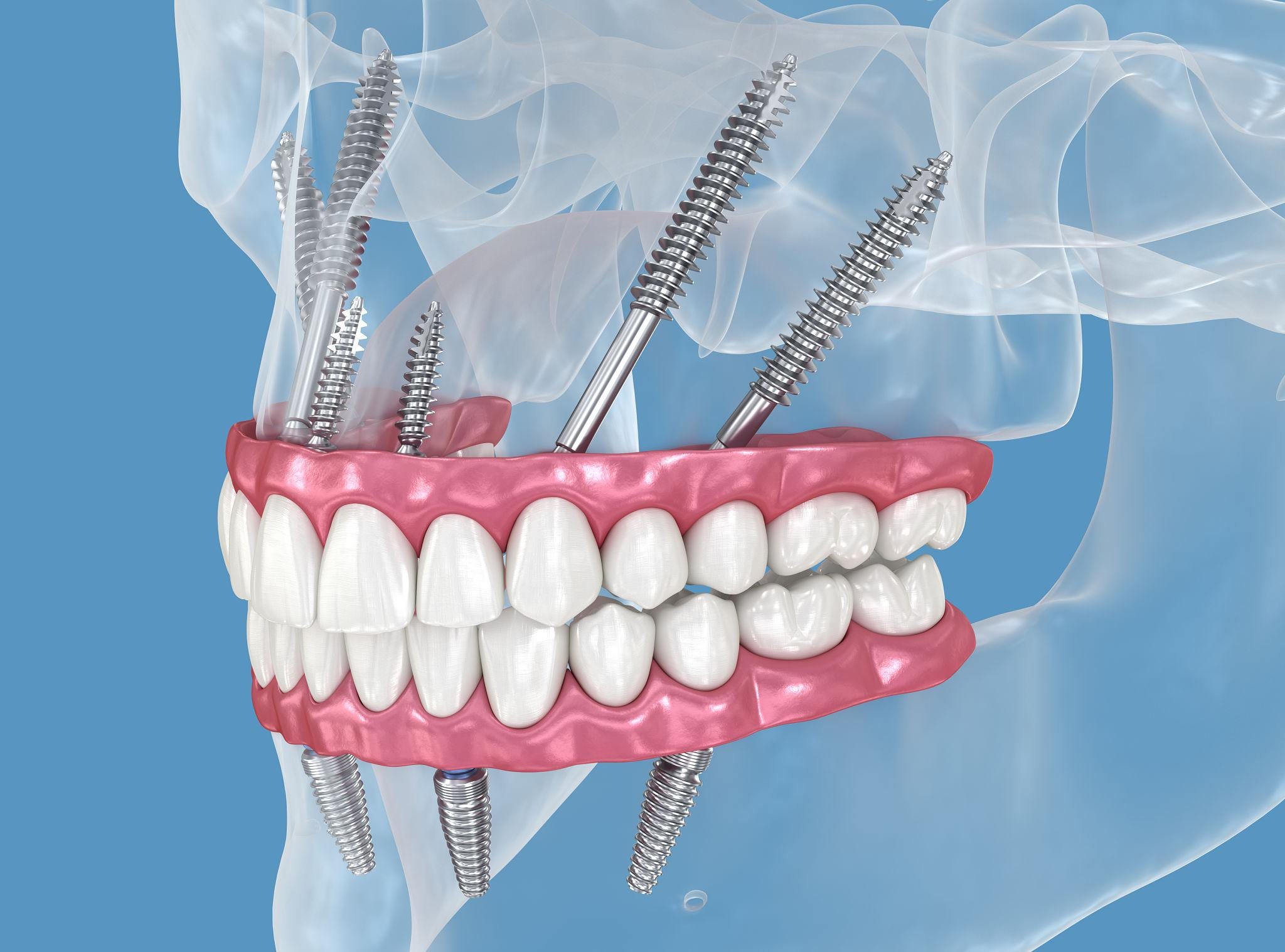
- Pterygoid implants are placed at about 45 degrees into the pterygoid bone behind the last upper molars. They are typically 15–22 mm long.
- Zygomatic implants are about 30–55 mm long and anchor in the cheekbone (zygoma), well above the upper jaw.
- Both can make dental implants without a bone graft possible in many cases, and both can be part of a fixed full-arch bridge.
- Pterygoid implants need some bone in the area behind the upper jaw; zygomatic implants can work when the upper jaw itself has very little bone left.
- The choice is made on a 3D CBCT scan, by an oral and maxillofacial surgeon. At Hospitaprime, Dr. Eren Pera plans both types.
What are pterygoid implants?
A pterygoid implant is placed at the very back of the upper jaw. It passes through the tuberosity (the bony bump behind the last upper molar) and anchors in the dense bone of the pterygoid region, where the upper jaw meets the base of the skull. It is placed at an angle of about 45 degrees, rather than straight up like a regular implant.
The main reason to use one is the sinus. After the back teeth are lost, the maxillary sinus often expands downwards and the bone underneath becomes too thin for implants. A regular solution would be a sinus lift with a bone graft and months of healing. A pterygoid implant bypasses this by reaching bone behind the sinus. It also gives a full-arch bridge support at the very back, so the bridge does not need a long unsupported extension (cantilever) behind the last implant. Our page on pterygoid implants describes the procedure.
What are zygomatic implants?
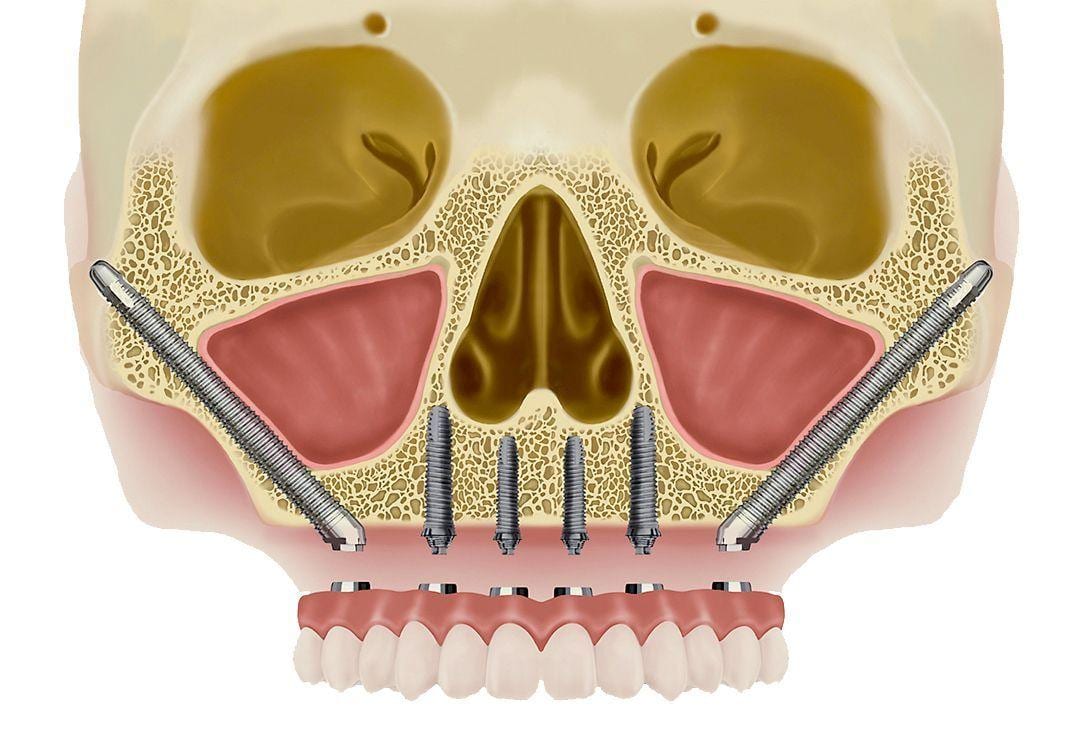
A zygomatic implant is a much longer implant that starts at the ridge of the upper jaw and anchors in the cheekbone. The cheekbone does not shrink after tooth loss the way the jaw does, so it offers stable anchorage even when the upper jaw has almost no bone left. At Hospitaprime each zygomatic implant is planned with the Zygoma Anatomy-Guided Approach (ZAGA), so its path follows your own cheekbone and sinus anatomy. Hospitaprime is Turkey’s first certified ZAGA Center.
Zygomatic implants can be used in pairs (usually at the back, combined with regular implants at the front) or as four implants, known as quad zygoma, when the front of the jaw has also lost bone. Read more on our zygomatic implants page and in how zygomatic implants differ from standard implants.
Pterygoid implants vs zygomatic implants: how do they compare?
| Pterygoid implant | Zygomatic implant | |
|---|---|---|
| Where it anchors | Pterygoid bone behind the upper jaw | Cheekbone (zygoma) |
| Typical length | About 15–22 mm | About 30–55 mm |
| Angle | About 45 degrees, towards the back | Steep, up towards the cheekbone |
| Area it supports | The back of the upper jaw (molar region) | The back, or with quad zygoma the whole upper jaw |
| Bone it needs | Some bone in the tuberosity and pterygoid region | Very little bone in the upper jaw; relies on the cheekbone |
| Replaces | A sinus lift at the back of the jaw | A sinus lift and larger bone grafts |
| Relation to the sinus | Stays behind the sinus | Path planned around the sinus (ZAGA): inside, partly in the wall or outside it |
| Used alone or combined | Usually combined with regular or zygomatic implants | Combined with regular implants, or four together (quad zygoma) |
| Fixed temporary teeth | Possible within a full-arch plan if the implants are stable | Soon after surgery at Hospitaprime, if suitable |
| Who places it | Surgeon experienced in posterior maxillary surgery | Oral and maxillofacial surgeon |
When is a pterygoid implant the better choice?
A pterygoid implant is usually considered when:
- The front of the upper jaw still has enough bone for regular implants, but the back does not, because the sinus has expanded downwards.
- You want to avoid a sinus lift and the healing time it adds.
- A full-arch bridge needs support at the back to avoid a long cantilever, for example as part of an All-on-4 or All-on-6 plan.
- The CBCT shows enough bone in the tuberosity and pterygoid region to anchor the implant.
Because it is shorter and does not enter the cheekbone, the surgery is generally more limited than zygomatic surgery. It does require good access to the back of the mouth, so a limited mouth opening can make it harder.
When is a zygomatic implant the better choice?
A zygomatic implant is usually considered when:
- Bone loss in the upper jaw is severe, so even the area behind the sinus is not enough.
- Earlier bone grafts or implants have failed.
- You were told that you would need a large graft, for example from the hip, before any implants.
- Both the front and the back of the jaw have lost bone; in that case four zygomatic implants (quad zygoma) may be planned.
The trade-off is a more specialised operation with its own risks, especially around the sinus and the cheek.
Can zygomatic and pterygoid implants be combined?
Yes, and this is common. A full upper arch can be carried by regular implants in the front, zygomatic implants where the bone is missing and pterygoid implants at the very back, depending on what the CBCT shows on each side. The two sides of the jaw do not have to be treated the same way. Dr. Pera chooses the configuration for each patient. Our article on implants for severe bone resorption gives more background.
What are the risks of each?
Both are surgical procedures, and neither is risk-free.
- Pterygoid implants: the area behind the upper jaw is close to blood vessels and muscles, so bleeding, swelling and limited mouth opening for a few days are possible. The implant can be harder to clean because it sits so far back. Like any implant, it may fail to integrate.
- Zygomatic implants: possible problems include sinusitis, gum infection around the implant, temporary numbness of the cheek or lip, swelling and bruising around the eye, an opening between the mouth and the sinus that needs correction and, rarely, an implant that does not integrate.
For both, smoking and poor oral hygiene raise the risk of infection and failure. Dr. Eren Pera explains your individual risks before treatment.
Frequently asked questions
Are pterygoid implants safer than zygomatic implants?
They carry different risks rather than simply fewer. Pterygoid surgery is more limited in extent, but it works only when there is bone behind the upper jaw. The safest option is the one that fits your anatomy, which a CBCT shows.
Do pterygoid implants go into the sinus?
No. They are placed behind the sinus, which is why they can replace a sinus lift at the back of the upper jaw.
Are pterygoid implants an alternative to a bone graft for implants?
Often, yes. At the back of the upper jaw, a pterygoid implant can replace a sinus lift with a bone graft, because it anchors in bone behind the sinus. Whether it is possible depends on the bone your CBCT shows in that area.
Can I have pterygoid implants with All-on-4?
Often, yes. Pterygoid implants can add support at the back of an All-on-4 or All-on-6 bridge. See our All-on-4 and All-on-6 page for the regular full-arch options.
Can both be loaded with fixed teeth straight away?
In a full-arch plan, fixed temporary teeth can often be attached soon after surgery if all implants are stable. At Hospitaprime, for zygomatic cases this happens on the first visit, if suitable; when exactly depends on your case.
Can I have pterygoid implants in Turkey?
Yes. At Hospitaprime in Istanbul, oral and maxillofacial surgeon Dr. Eren Pera plans and places both pterygoid and zygomatic implants, after reviewing your CBCT and examining you.
Ask Dr. Eren Pera
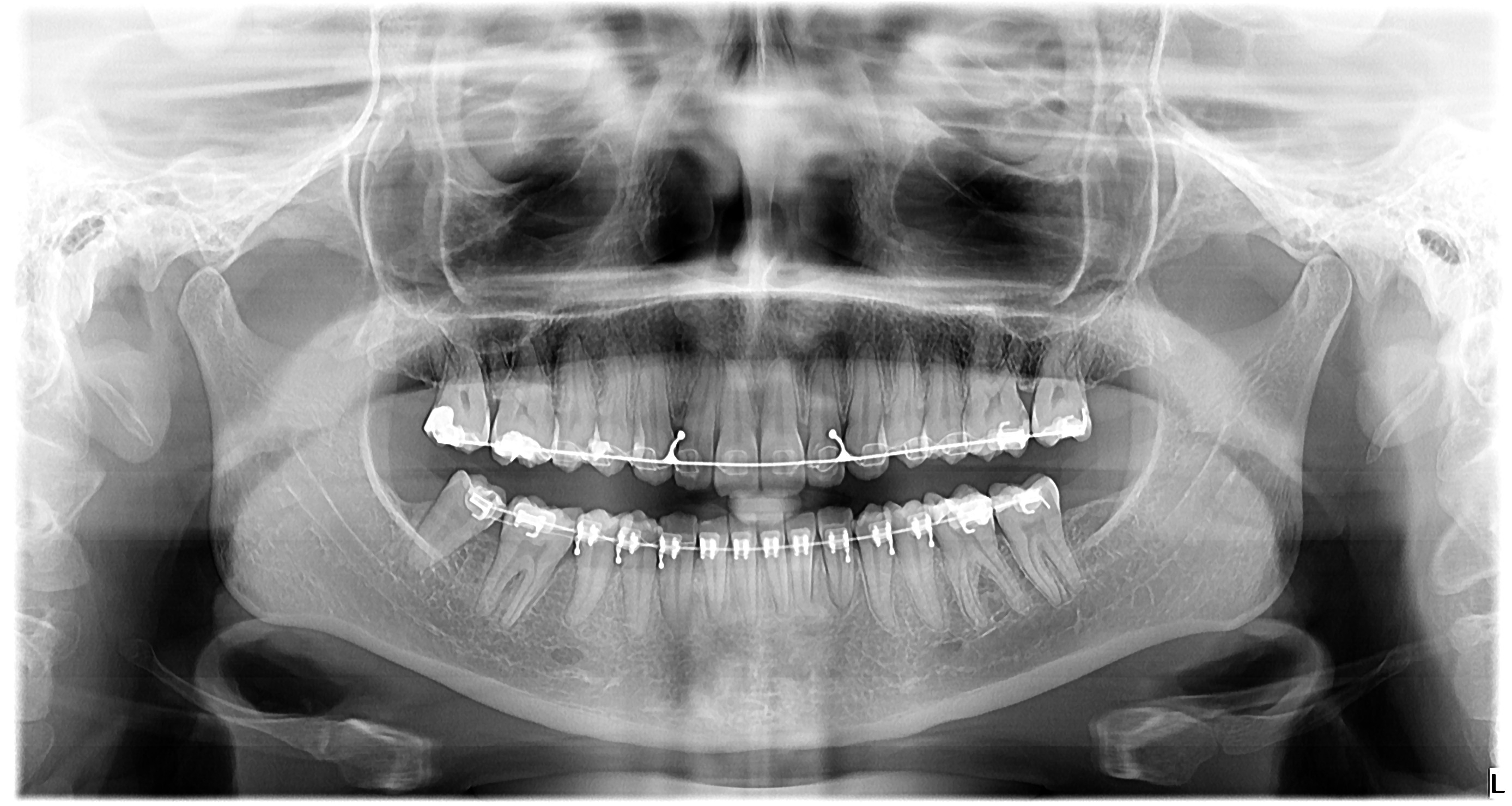
Told you need a sinus lift or a bone graft? Send your CBCT or panoramic X-ray on WhatsApp (+90 541 855 89 95) or through the contact form. Dr. Eren Pera’s team replies in writing with the option, or combination of options, that suits your bone.
More from our blog
 Quad Zygoma Implants: Who Needs Four Zygomatic Implants?Quad zygoma means four zygomatic implants, two in each cheekbone, carrying a fixed upper bridge when the whole upper jaw has lost bone. Who it is for, how it works, recovery and the alternatives.Read more →
 ZAGA Zygomatic Implants: The Anatomy-Guided Approach ExplainedWhat ZAGA zygomatic implants are, how it differs from the classic zygomatic technique, and what it means that Hospitaprime is Turkey’s first certified ZAGA Center.Read more →
 What Is a Zygomatic Implant? | 2026Quick Answer A zygomatic implant is a long dental implant (30–55 mm) that anchors into the cheekbone instead of the jawbone. It is designed for patients with severe upper jaw bone loss wRead more →
Get a Free Written Consultation
Tell us a little about what you need. Dr. Eren Pera’s team replies with a written plan and price.