Quad Zygoma Implants: Who Needs Four Zygomatic Implants?
 Hospitaprime8 min read
Medically reviewed by Dr. Eren Pera
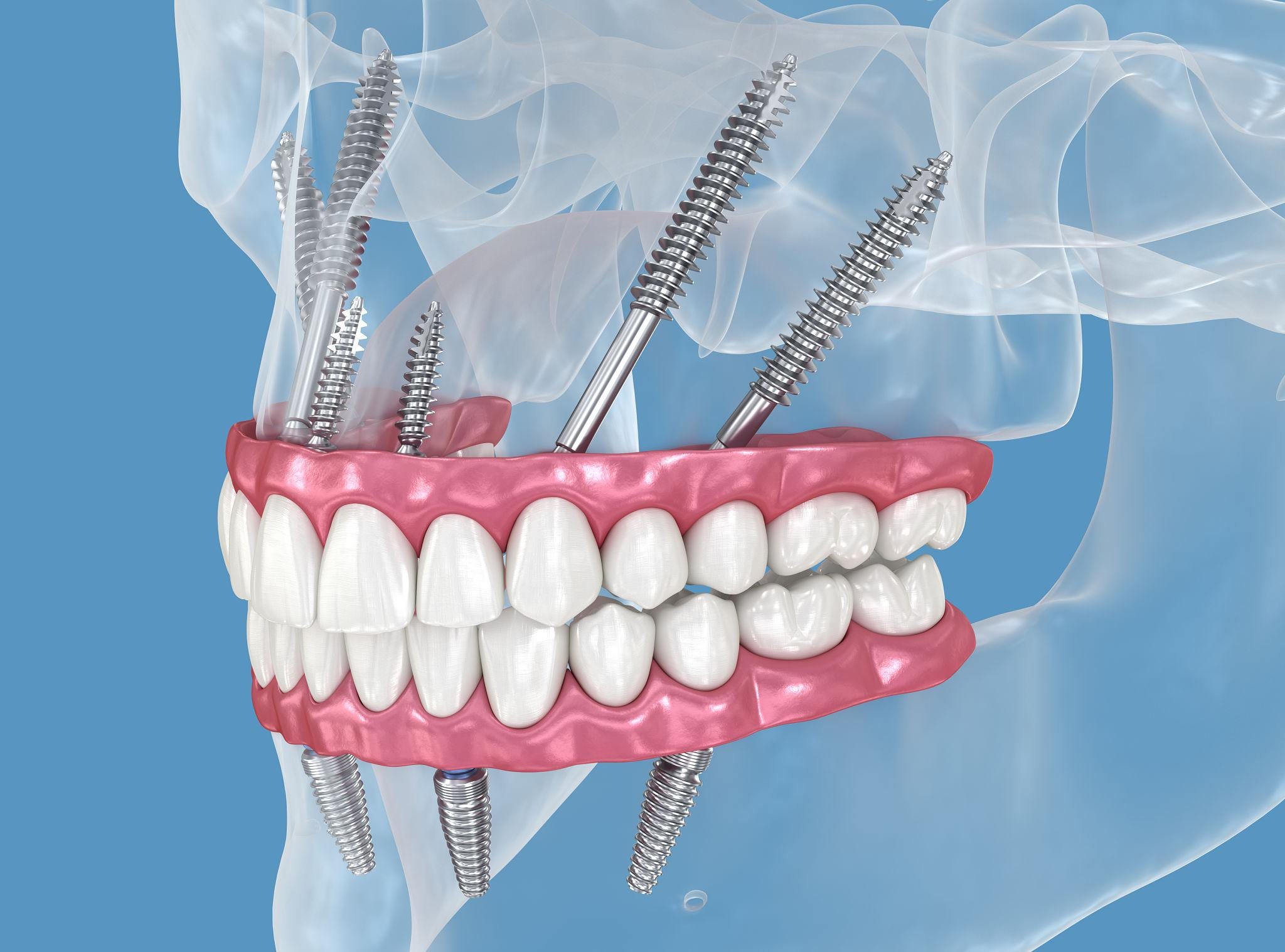
Quad zygoma is a full upper-jaw treatment that uses four zygomatic implants, two anchored in each cheekbone, and no regular implants, to hold a fixed bridge. It is used when both the front and the back of the upper jaw have too little bone for regular implants. Whether you need it can only be decided on a 3D CBCT scan.
Key facts
- What it is: four zygomatic implants (about 30–55 mm long each), two per cheekbone, carrying one fixed upper bridge.
- Who it is for: severe bone loss across the whole upper jaw, often after many years of wearing a denture, gum disease, failed implants or failed bone grafts.
- Bone graft: usually not needed, because the implants anchor in the cheekbone rather than the upper jaw.
- Teeth: if your case is suitable, fixed temporary teeth soon after surgery; the final bridge about 3–4 months later.
- Visits: two visits to Istanbul at Hospitaprime, usually 3–4 months apart: about 6 days, then about 10 days (approximate; it varies and can be shorter, so ask us on WhatsApp).
- Planning: each implant path is planned on your CBCT following the ZAGA approach. Hospitaprime is Turkey’s first certified ZAGA Center.
What is quad zygoma?
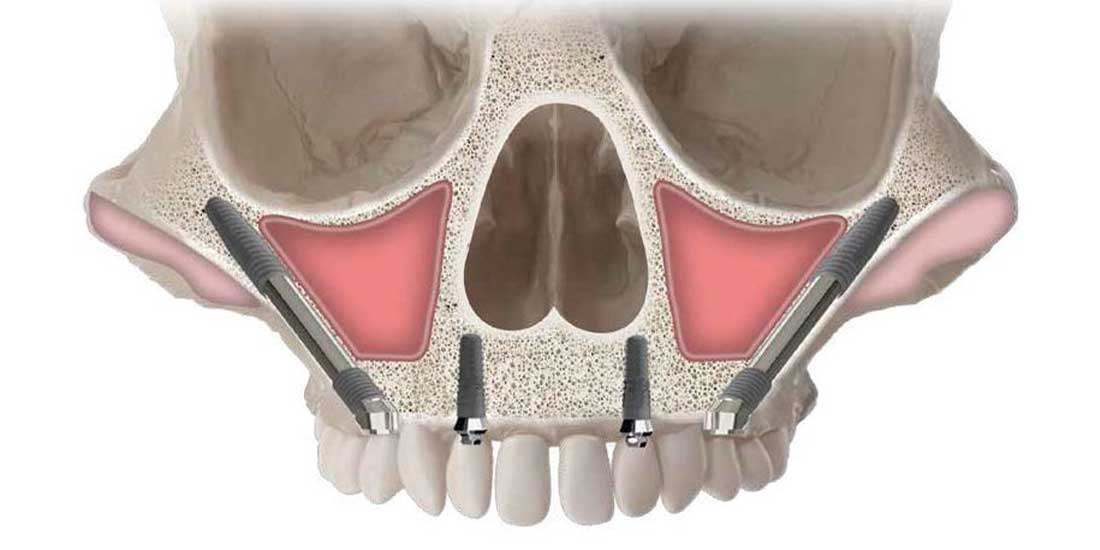
A standard dental implant needs enough bone in the jaw to anchor in. When the upper jaw has lost a lot of bone, a zygomatic implant reaches further up and anchors in the cheekbone (zygoma), which does not shrink after tooth loss the way the jaw does.
“Quad” means four. In a quad zygoma treatment, also called quad zygomatic implants, two zygomatic implants are placed on each side: one towards the back and one further forward. Together they carry a full-arch bridge of fixed teeth. Because there are no regular implants in the front, quad zygoma is chosen when the front of the upper jaw has also lost too much bone. When the front bone is still good enough, the more common option at Hospitaprime is a zygoma hybrid: two zygomatic implants at the back with two to four regular implants in the front.
Who needs quad zygoma when there is not enough bone for dental implants?
You may be a candidate if a 3D scan shows not enough bone for dental implants in both the front and the back of your upper jaw. This kind of upper jaw bone loss is the main reason quad zygoma exists. Typical situations include:
- A loose upper denture worn for many years, with the ridge now very thin or flat.
- Bone loss after gum disease, infection, cysts or trauma.
- Earlier implants or bone grafts that failed and left little bone behind.
- Patients who were told that implants are not possible without large bone grafts taken from the hip or elsewhere.
Quad zygoma is usually not the right choice if you have enough bone for regular, tilted or zygoma hybrid implants, if you have active, uncontrolled sinus disease, or if a serious general health problem makes surgery unsafe. Heavy smoking that you are not willing to stop is also a reason for caution. Our article on jawbone loss explains why the upper jaw shrinks after tooth loss.
How does quad zygoma treatment work?
At Hospitaprime the treatment follows the same steps as other zygomatic implant cases:
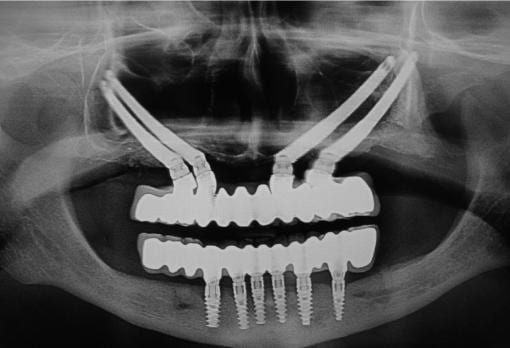
- Online review. You send a CBCT scan or a panoramic X-ray. Dr. Eren Pera checks how much bone you have and whether quad zygoma, a zygoma hybrid or another option fits.
- 3D planning. Each of the four implant paths is planned on your CBCT around your own cheekbone and sinus anatomy, following the Zygoma Anatomy-Guided Approach (ZAGA). The plan also defines where each implant comes out at the gum, so the bridge can be shaped correctly.
- Surgery (visit 1). The implants are placed under anaesthesia; local anaesthesia with optional sedation is used for zygomatic surgery at Hospitaprime. Dr. Pera discusses the anaesthesia that suits your case before the day.
- Fixed temporary teeth (visit 1). If the implants are stable enough, a fixed temporary bridge is attached soon after surgery. This is called immediate loading.
- Final bridge (visit 2). After about 3–4 months of healing, your permanent bridge is made and fixed on the implants.
Because the four implants are connected by the bridge, they support each other. This is one reason why immediate fixed teeth are often possible, but it is decided case by case on the day of surgery.
What is recovery like after quad zygoma?
Expect swelling and bruising around the cheeks and sometimes under the eyes. Swelling is normal, is controlled with medication and usually settles within about a week; recovery differs from patient to patient. During this time:
- Eat soft food and avoid chewing hard food on the temporary bridge while the implants heal.
- Avoid blowing your nose forcefully and follow the sinus advice you are given.
- Keep the bridge and gums clean with the tools and instructions you receive.
- Do not smoke; it raises the risk of infection and implant failure.
- Attend your check-ups in Istanbul and send photos to your coordinator after you go home.
Most people return to desk work after the first recovery days, but this depends on how you heal and what your work involves. Our article on having zygomatic implants with local anaesthesia describes the day of surgery in more detail.
What are the risks of quad zygoma?
Quad zygoma is specialised surgery, and it carries the same risks as other zygomatic implant treatment. With four zygomatic implants there are four implant sites to heal, so honest planning matters. Possible complications include:
- Sinusitis, usually treatable with medication.
- Infection or irritation of the gum around an implant.
- Temporary numbness of the cheek or upper lip.
- Swelling and bruising around the cheek and eye.
- An opening between the mouth and the sinus (oroantral fistula) that needs a minor correction.
- An implant that does not integrate, which may need to be treated or replaced.
- Problems with the bridge, such as a chipped tooth or a loose screw, which are repaired at check-ups.
More detail is in what can go wrong with zygomatic implants. Dr. Pera explains your individual risks before treatment.
What are the alternatives? Other implants for severe bone loss
Quad zygoma is one of several implants for severe bone loss. The right option depends on how much bone you have, and where. Dr. Pera often combines techniques in one plan.
| Option | What it uses | When it is considered |
|---|---|---|
| Quad zygoma | Four zygomatic implants, two per cheekbone | Severe bone loss at the front and back of the upper jaw |
| Zygoma hybrid | Two zygomatic implants at the back, two to four regular implants at the front | Back of the jaw lost, front bone still usable |
| Pterygoid implants | Implants angled into dense bone behind the upper jaw | To support the back teeth without a sinus lift; often combined with other implants |
| All-on-4 / All-on-6 | Four or six regular implants, the back ones tilted | Enough bone remains in the jaw for regular implants |
| Bone graft or sinus lift, then implants | Graft first, regular implants after healing | When grafting is suitable and you accept a longer treatment time |
| Removable denture | No implants, or implants with a removable overdenture | When surgery is not possible or not wanted |
You can read about the regular full-arch options on our All-on-4 and All-on-6 page, and about zygomatic implants in general on our zygomatic implants page.
How much does quad zygoma cost?
At Hospitaprime, a zygomatic implant costs $3,000 per implant. Quad zygoma uses four zygomatic implants, so your total depends on how many implants your 3D plan needs and on the bridge; a zygoma hybrid also includes regular implants, which are priced separately. The $3,000 is the price of one Straumann zygomatic implant only: the final bridge, the temporary teeth and the rest of the treatment are priced separately in your written plan, which you receive with a fixed price before you book flights.
Frequently asked questions
What is the difference between quad zygoma and a zygoma hybrid?
Quad zygoma uses four zygomatic implants and no regular implants. A zygoma hybrid uses two zygomatic implants at the back and two to four regular implants at the front, where bone is often better preserved. The hybrid is the more common configuration at Hospitaprime.
Do I need a bone graft before quad zygoma?
Usually not. The implants anchor in the cheekbone, so most patients avoid a sinus lift or bone graft and the months of healing a graft adds.
Will I leave Istanbul with fixed teeth?
If your implants are stable enough on the day of surgery, a fixed temporary bridge is attached soon after surgery. Whether this is possible is decided during treatment.
How many visits does quad zygoma take?
At Hospitaprime, two visits, usually 3–4 months apart: about 6 days for the implants and temporary teeth, then about 10 days for the final bridge. These figures are approximate: they vary from patient to patient and can be shorter, so message us on WhatsApp for the timing of your own plan.
Are dental implants possible with no bone at all?
When the upper jaw has almost no bone left, regular dental implants are usually not possible, but the cheekbone can still anchor zygomatic implants. This is the situation in which quad zygoma is considered, after a CBCT confirms the cheekbones are suitable.
Can quad zygoma be used after failed implants?
Often, yes. Quad zygoma is one of the options used when earlier implants or grafts have failed, because it does not depend on the damaged jawbone. A CBCT review shows whether it suits your case.
How long do the implants last?
Zygomatic implants are designed to be permanent. The bridge on top needs regular check-ups and maintenance and may need replacing over the years.
Ask Dr. Eren Pera
Not sure whether you need quad zygoma, a zygoma hybrid or another option? Send your CBCT or panoramic X-ray on WhatsApp (+90 541 855 89 95) or through the contact form. Dr. Eren Pera’s team replies in writing with the configuration that suits your bone and a treatment plan.
More from our blog
 Cost of Zygoma Implants: Advantages of HealthcareThe cost of zygoma implants in Turkey is $3,000 per implant.Read more →
 What Are Full Mouth Restoration with Zygoma Implants?Full mouth restoration with zygoma implants is a comprehensive dental rehabilitation procedure that combines zygomatic implants (anchored in the cheekbone) with conventional implants to replace all missing teeth in patients with severe upper jaw bone loss. This advanced full mouth reconstruction tecRead more →
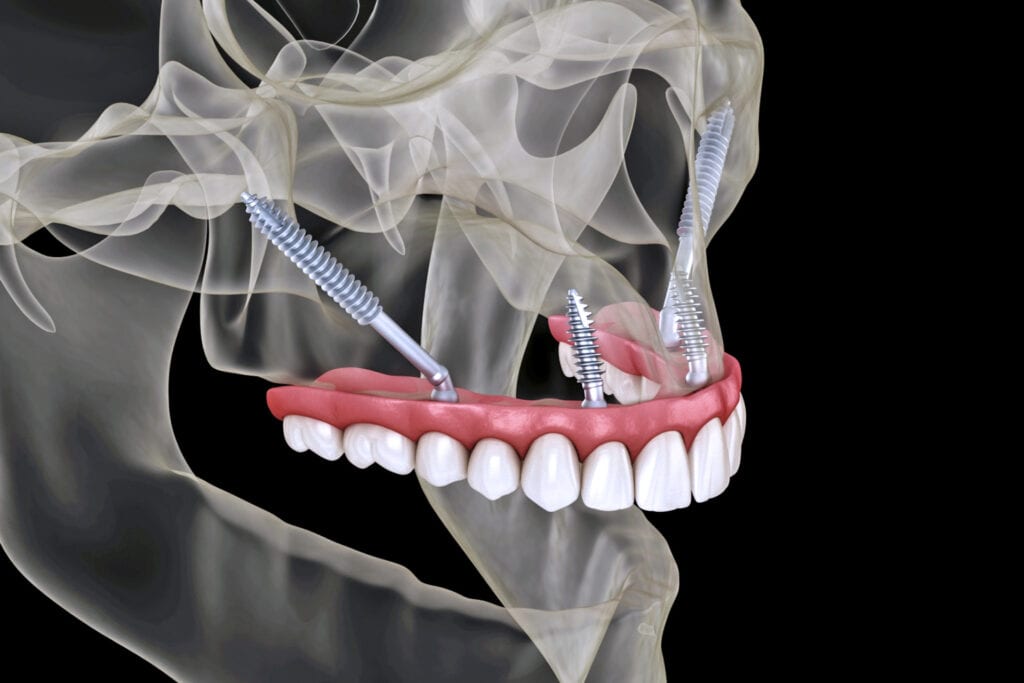 What Is Full Mouth Restoration with Zygoma Implants?Full mouth restoration with zygoma implants is a specialized dental procedure that offers a solution for patients who have experienced significant bone loss in the upper jaw. These patients are often unable to receive traditional dental implants due to the lack of bone support. Zygoma implants are lRead more →
Get a Free Written Consultation
Tell us a little about what you need. Dr. Eren Pera’s team replies with a written plan and price.