Fibula Free Flap Jaw Reconstruction: Surgery and Implants
 Hospitaprime7 min read
Medically reviewed by Dr. Eren Pera
Fibula free flap jaw reconstruction rebuilds a missing part of the jaw with bone from the lower leg that keeps its own blood supply. In selected patients, dental implants, and sometimes temporary teeth, are placed in the same operation; many others have the implants in a second stage once the new bone has healed. Everything is planned in 3D from CT scans.
Key facts
- What it is: the jaw is rebuilt with a segment of the fibula (lower-leg bone) and its blood vessels, connected to vessels in the neck under a microscope.
- Who it is for: patients who have lost part of the jaw, or will lose it, because of a tumour, cyst, injury, a birth defect or failed earlier surgery.
- How long: fibula flap reconstruction takes about 6–8 hours, with a team that includes a plastic surgeon.
- Planning: the bone cuts and the shape of the new jaw are planned in 3D from CT scans.
- Immediate or staged: implants go in during the same operation only when the case allows it; otherwise they follow once the new bone has healed.
- Alternative: an iliac crest (hip) bone graft for smaller defects or when a fibula is not suitable.
What is fibula free flap jaw reconstruction?
When part of the lower jaw (mandible) or upper jaw (maxilla) has to be removed, the gap must be rebuilt so you can chew, speak and keep the shape of your face. The most widely used method for larger lower-jaw defects is the free fibula flap: a segment of the thinner bone of the lower leg is taken together with its artery and vein, shaped to match the missing jaw and connected to blood vessels in the neck under a microscope.
In a conventional reconstruction, the new bone heals first and dental implants are placed months later. In selected cases, the dental implants are placed into the fibula during the same operation as the reconstruction, and sometimes a temporary bridge is fitted as well. The goal is to shorten the time a patient lives without teeth after a major operation.
How does the fibula flap operation work?
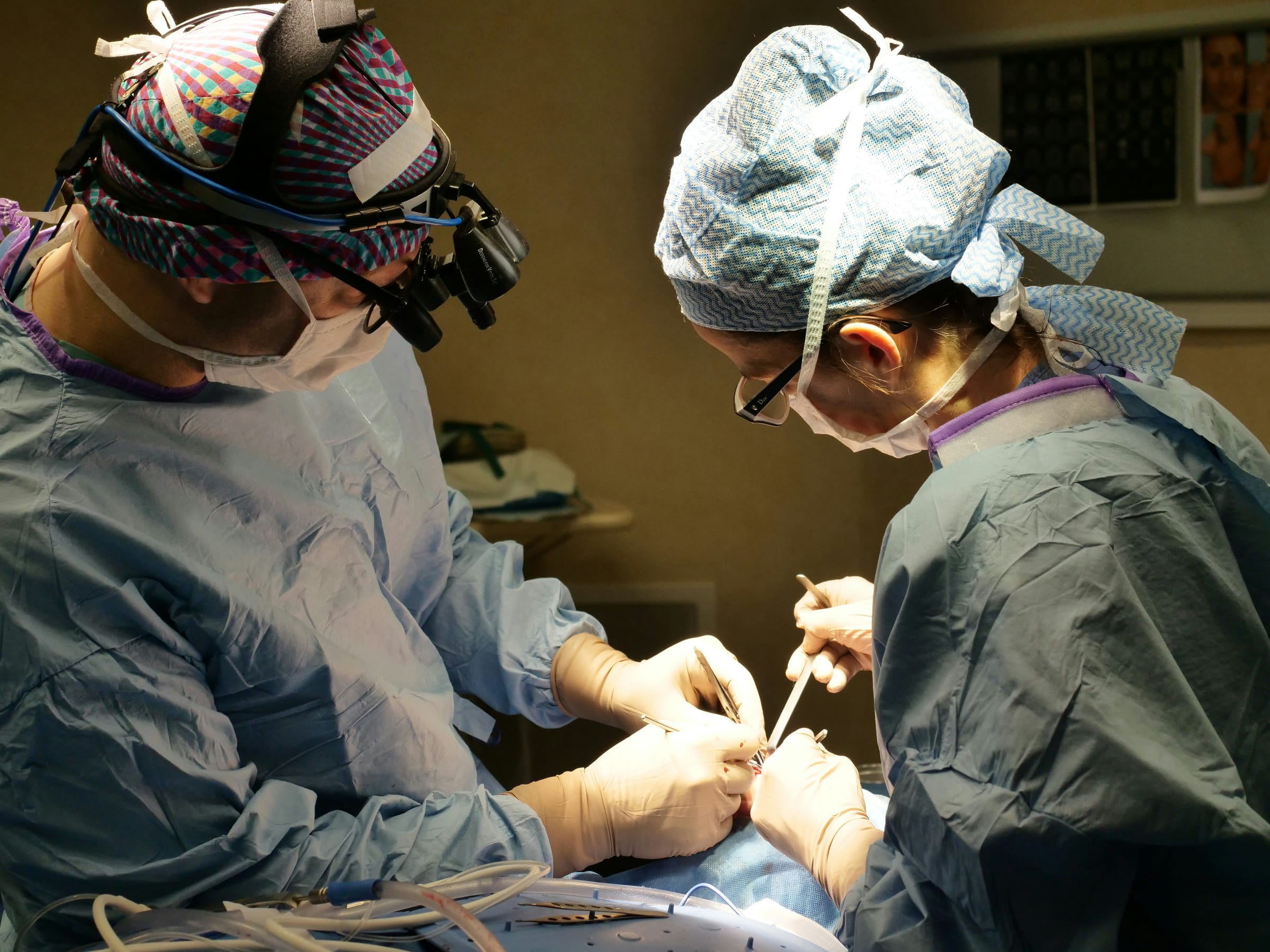
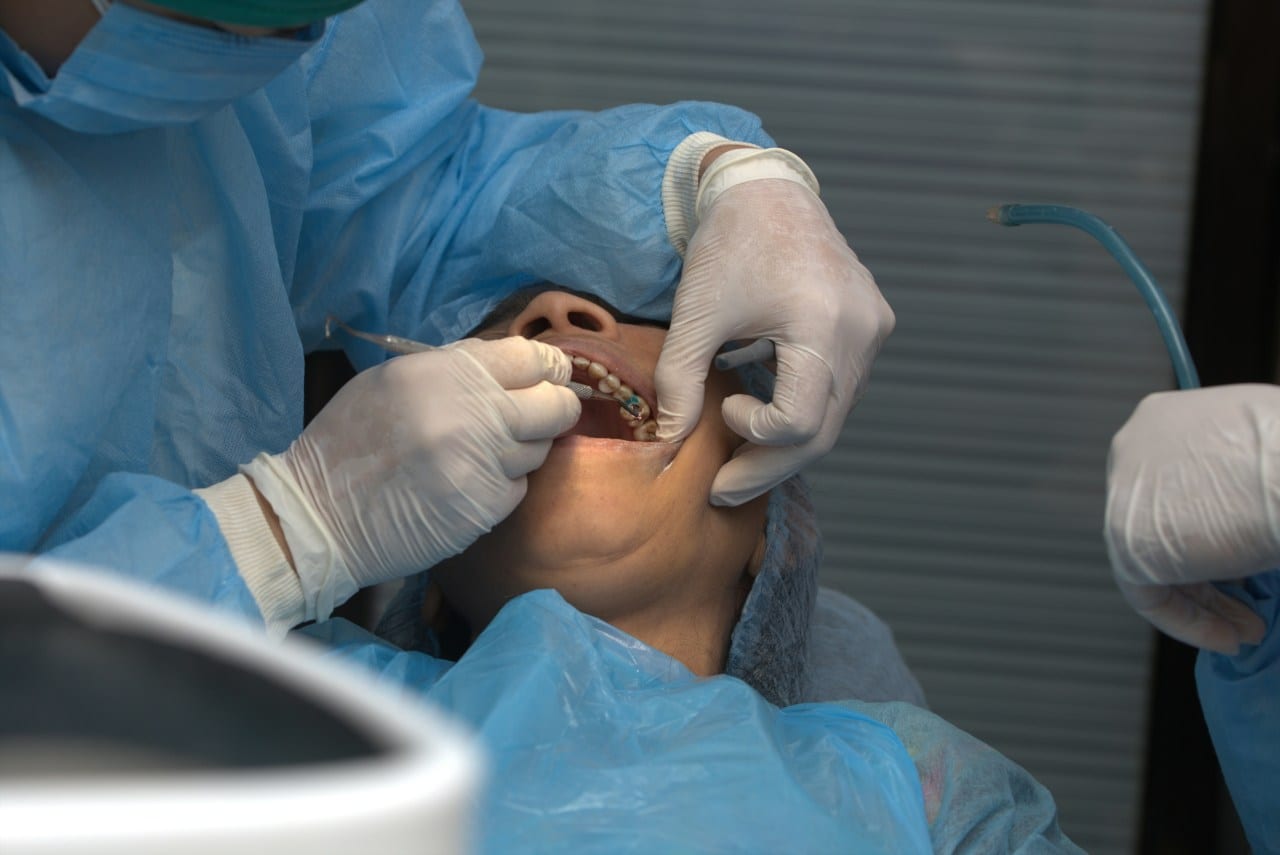
The operation is carried out by a team. The maxillofacial surgeon removes the diseased or damaged part of the jaw, while the plastic surgeon harvests the fibula from the leg with its blood vessels. The bone is cut into segments that follow the curve of the jaw, fixed with plates and screws, and its artery and vein are joined to vessels in the neck. Because the bone keeps its own blood supply, it heals into the jaw as living bone.
3D planning matters in every step. From your CT scans, the surgeons plan where the jaw is cut, how the fibula is divided and where the implants would sit, so the new bone supports the teeth in the right position. You can read more about the technique on our free fibula flap mandibular reconstruction page.
Who needs jaw reconstruction after tumor removal or injury?
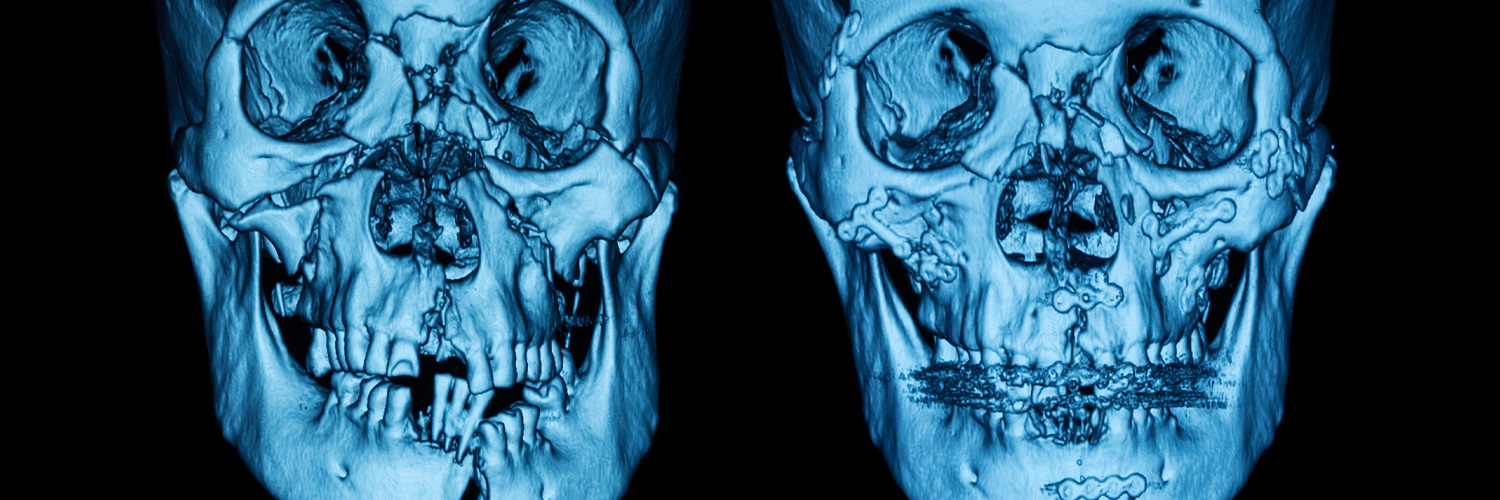
Mandibular reconstruction surgery is considered when a section of jaw bone is missing or must be removed. Common reasons include:
- Benign or malignant tumours of the jaw or mouth that need part of the bone removed. Our page on benign and malignant pathologies describes these conditions.
- Large cysts that have destroyed bone, described in our guide to jaw cysts.
- Severe facial trauma with lost bone.
- Birth defects of the jaw.
- Failed earlier reconstruction or bone damaged after radiotherapy.
For cancer patients, the reconstruction is planned together with the tumour treatment. If radiotherapy is likely after surgery, this can change the timing of implants and teeth, and the team discusses it with you before the operation.

Immediate or staged: when can dental implants go in?
Jaw reconstruction with dental implants can be done in one stage or in two. The right choice depends on the disease, the planned follow-up treatment, the quality of the bone and your general health.
| Approach | What happens | When it is considered |
|---|---|---|
| Fibula flap with immediate implants | Fibula flap and implants in one operation; sometimes a temporary bridge as well | Planned cases with a clear diagnosis, enough bone height and no factors that make immediate implants unsafe |
| Fibula flap, implants later (staged) | The bone heals first; implants and teeth follow in a later operation | When immediate implants are not advisable, for example around planned radiotherapy |
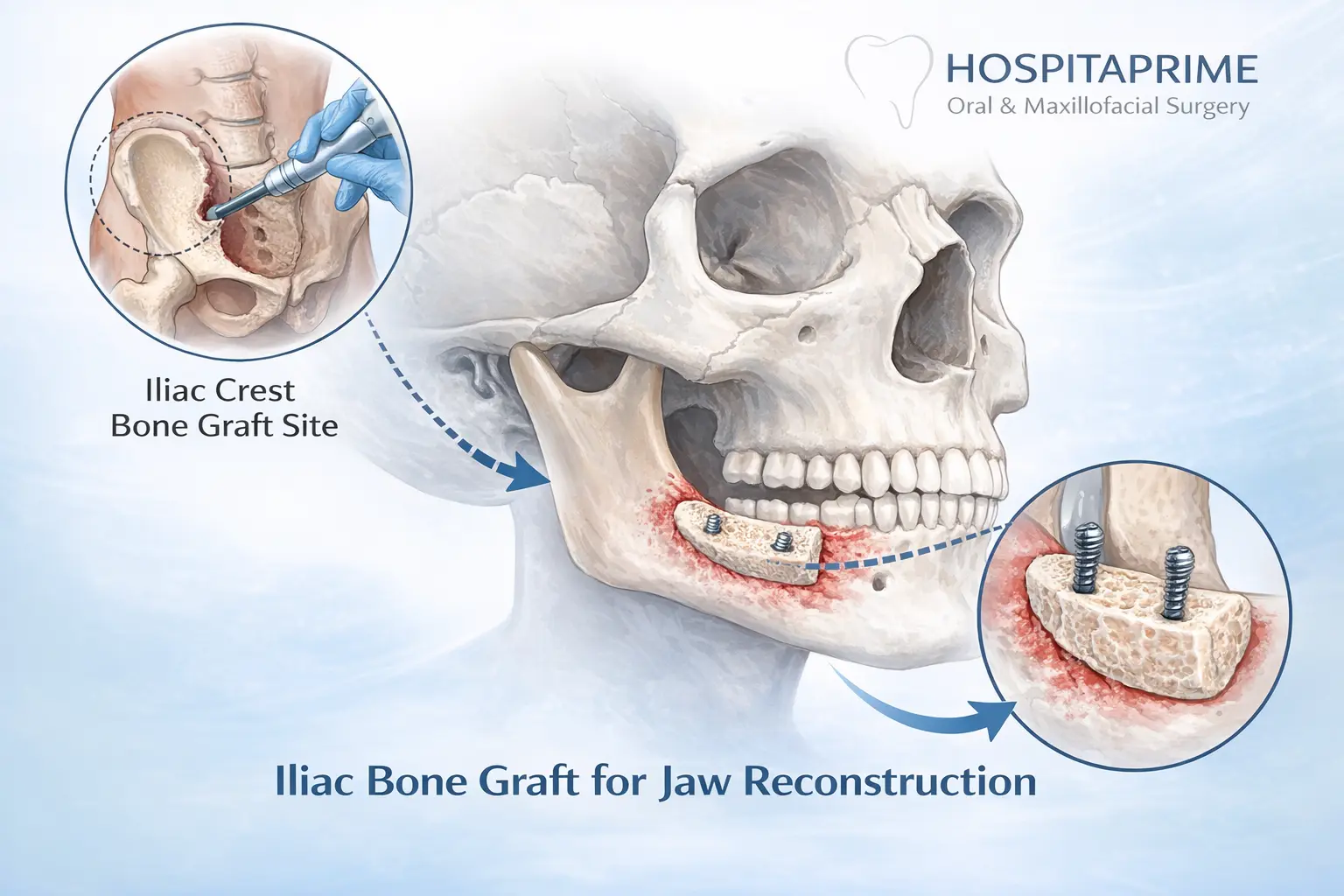
| Iliac crest (hip) bone graft | Bone from the hip rebuilds the jaw; implants usually 4–6 months later | Smaller defects, or when a fibula is not suitable |
| Bone graft without implants | The jaw is rebuilt; teeth with a removable prosthesis | When implants are not possible or not wanted |
Whether implants can be placed on the day of reconstruction is decided from your scans and confirmed during surgery. Read more about hip bone grafts on our iliac bone graft page.
What are the risks of fibula free flap surgery?
Fibula flap reconstruction is long, complex surgery, and the risks are discussed with you in writing before you decide. They include:
- Problems with the blood supply of the flap. If the connected blood vessels clot, a second operation may be needed, and part or all of the flap can be lost.
- Infection or wound breakdown in the mouth, the neck or the leg.
- Exposure of plates or screws through the gum or skin, which may need further treatment.
- Leg effects at the donor site, such as ankle stiffness, weakness or slow skin healing. Most patients walk again with physiotherapy, but this takes time.
- Implant problems, such as an implant that does not fuse with the bone, especially after radiotherapy.
- Numbness of the lip, chin or tongue, depending on the nerves involved.
- General risks of long anaesthesia, such as chest infection or blood clots.
What is recovery like after mandibular reconstruction surgery?
Recovery is longer than after other jaw operations. You stay in hospital under close monitoring of the flap, and the team helps you start walking and eating again step by step. Expect a liquid or soft diet at first, physiotherapy for the leg and regular wound care. Swelling of the face and neck settles over weeks. If implants and a temporary bridge were placed, you follow strict instructions about what you can chew while the bone heals. The final teeth are made once the implants and the new bone are stable.
Jaw reconstruction surgery in Turkey: what does the cost depend on?
Reconstruction is priced individually. After Dr. Eren Pera reviews your scans and reports you receive a written plan and price. The cost depends on:
- The size and location of the defect, and whether the upper or lower jaw is involved.
- Fibula flap or hip graft, and the size of the surgical team.
- Immediate or staged implants, the number of implants and the type of teeth.
- Hospital stay and intensive monitoring after surgery.
- Earlier treatment, such as plates or grafts that must be removed.
Who performs jaw reconstruction at Hospitaprime?
Reconstruction is led by oral and maxillofacial surgeon Dr. Eren Pera (DDS, OMFS), who trained at Hacettepe and Ankara Universities, with rotations in anaesthesiology, emergency medicine, plastic and reconstructive surgery and ENT. Fibula flap operations are carried out in hospital with a team that includes a plastic surgeon. Hospitaprime is also Turkey’s first certified ZAGA Center for zygomatic implants.
Frequently asked questions
Can everyone have implants in the same operation as the reconstruction?
No. Immediate implants need a planned operation, enough bone in the fibula and no factors that make them unsafe, such as some radiotherapy plans. Many patients are better served by placing implants in a second stage.
How long does fibula free flap jaw reconstruction take?
About 6–8 hours for the reconstruction, carried out by a team that includes a plastic surgeon.
Can I walk normally without part of my fibula?
The fibula carries little of the body’s weight, so most people walk again after rehabilitation. Ankle stiffness or weakness can occur, and physiotherapy is part of recovery.
Can dental implants be placed in the new jaw later?
Yes. If implants are not placed during reconstruction, they can usually be added once the new bone has healed, after a CBCT scan confirms the bone is ready.
Is a hip bone graft an alternative to the fibula?
For smaller defects, an iliac crest graft can rebuild the jaw, with implants usually placed 4–6 months later. Large defects usually need bone with its own blood supply, such as the fibula.
I had a jaw tumour removed elsewhere. Can I still have reconstruction?
Often, yes. Send your CT scans, pathology and operation reports. Dr. Pera reviews them and explains whether reconstruction is possible and how it would be staged.
Ask Dr. Eren Pera
If you need jaw reconstruction, or were told part of your jaw must be removed, send your CT scan and reports on WhatsApp (+90 541 855 89 95) or through our contact form. Dr. Eren Pera’s team replies in writing with a first opinion, the reconstruction options that suit your case and a written price.
More from our blog
 Facial and Jaw Implants: Chin, Jawline, Cheekbone & Custom PEEKFacial and jaw implants are surgical devices designed to enhance or reconstruct facial contours by augmenting bone structures in the chin, jawline, cheekbones, and midface regions. These biocompatible implants made from materials like silicone, medpor, or custom PEEK (polyetheretherketone) are placeRead more →
 How Is a Chin Implant Procedure Performed?A chin implant procedure (mentoplasty) is performed by making a small incision either inside the mouth or beneath the chin, creating a pocket in front of the chin bone, and inserting a silicone or porous implant to enhance facial profile and balance. The chin augmentation surgery typically takes 30-Read more →
 How Long Does Genioplasty with Chin Implants Last?Genioplasty with chin implants is a surgery that corrects and shapes the facial profile and jawline. The procedure, which gives volume and prominence to the chin, harmonizes the face, nose, neck, and cheeks. The operation is applied with certain techniques and approaches and takes approximately 1-2 Read more →
Get a Free Written Consultation
Tell us a little about what you need. Dr. Eren Pera’s team replies with a written plan and price.