Double Jaw Surgery in Turkey: How 3D Virtual Planning Works
 Hospitaprime7 min read
Medically reviewed by Dr. Eren Pera
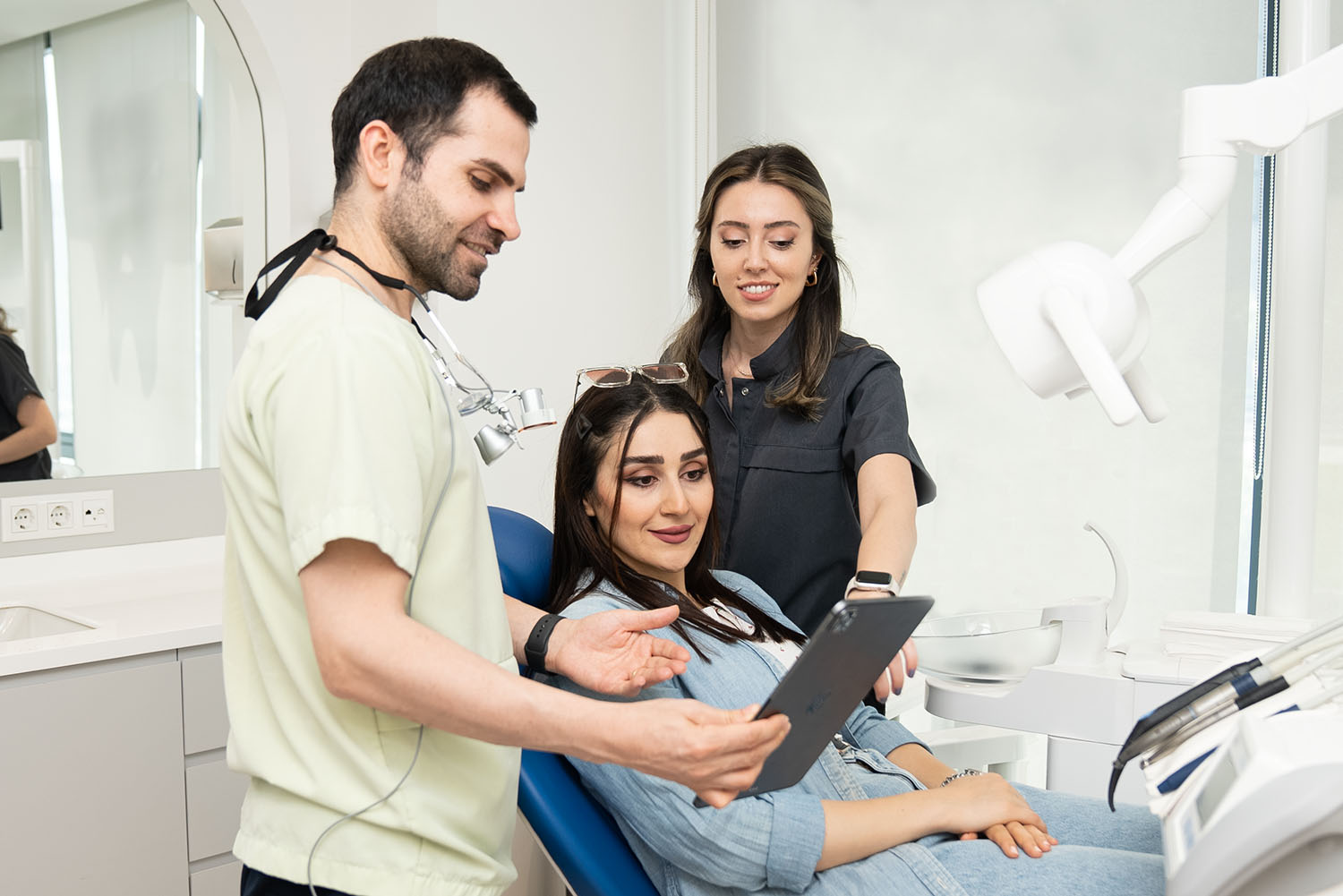
For double jaw surgery in Turkey at Hospitaprime, every operation is first planned in 3D on a computer model of your own skull, teeth and face. CBCT, tooth and face scans are combined, the surgeon moves the jaws on screen, and 3D-printed splints, plus guides and custom plates where needed, carry the plan into surgery.
Key facts
- Records: a full-head CBCT scan, an intraoral scan of the teeth and a 3D analysis of the face, plus a clinical examination and photographs.
- Planning: the jaws are separated on the 3D model and moved virtually to the planned bite and profile, within safe anatomical limits.
- Transfer to surgery: 3D-printed surgical splints (wafers) carry the planned position into the operating room; patient-specific plates and surgical guides are used when the movement is complex.
- What you see: at Hospitaprime, Dr. Eren Pera explains your 3D plan and expected profile to you live before surgery.
- Limits: the 3D plan is very precise for bone and teeth, but the soft-tissue (face) prediction is an estimate, not a guarantee.
- Timeline: in Istanbul, records on day one, the plan explained on day two and surgery on day three are typical.
What is 3D virtual surgical planning for jaw surgery?
Orthognathic surgery, also called corrective jaw surgery, moves the upper jaw, the lower jaw, the chin, or a combination, into a new position to correct the bite and the facial profile. Traditionally this was planned with 2D X-rays, plaster models of the teeth and hand-made splints. Virtual surgical planning does the same job on a computer: the surgeon builds a 3D model of your head from your scans, simulates the bone cuts, and tests different jaw movements before choosing the final plan.
For orthognathic surgery in Turkey at Hospitaprime, Dr. Eren Pera, an oral and maxillofacial surgeon (DDS, OMFS), creates your 3D surgical plan himself and performs the surgery. Jaw surgery is his main specialty, including complex and revision cases. The whole process is described on our orthognathic surgery page.
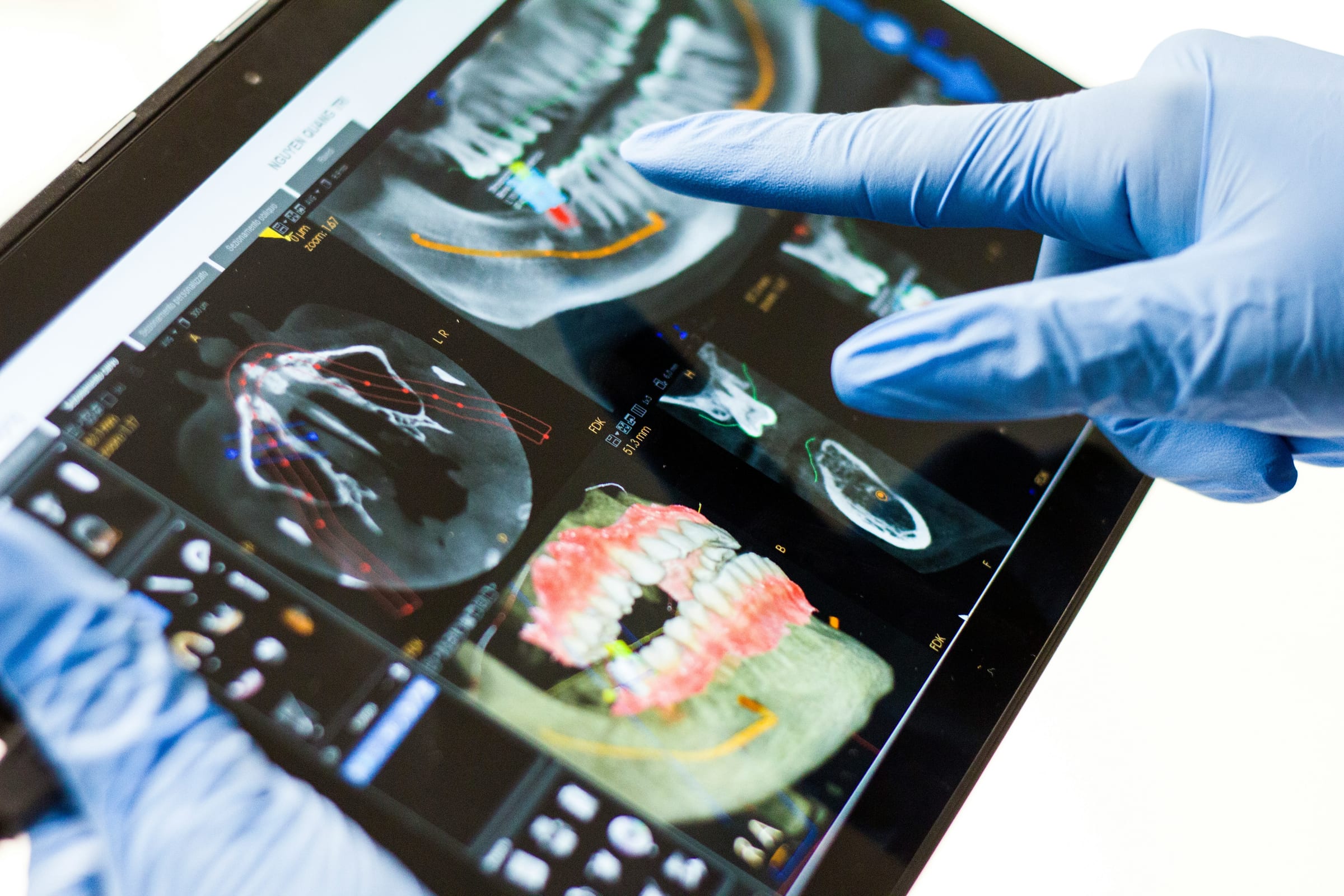
Which scans and records are taken?
| Record | What it shows | Why it matters |
|---|---|---|
| Full-head CBCT scan | Bones of the face and jaws in 3D, tooth roots, nerve canals, the airway | Base of the 3D model; shows where bone can be cut safely |
| Intraoral scan | A precise digital copy of your teeth | Fine detail of the bite, which a CBCT cannot show sharply |
| 3D facial scan and analysis | The surface of your face and its proportions | Links the bone plan to how your face looks |
| Photographs and clinical examination | Smile, profile, symmetry, jaw joint function | Checks the scans against how you look and move in real life |
A CBCT uses a much lower radiation dose than a conventional medical CT, but it is still an X-ray, so it is taken only when needed for planning.
How is double jaw surgery in Turkey planned in 3D?
The planning follows a logical order:
- Building the model. The CBCT, the tooth scan and the face scan are merged into one 3D model, so the teeth, bones and face line up.
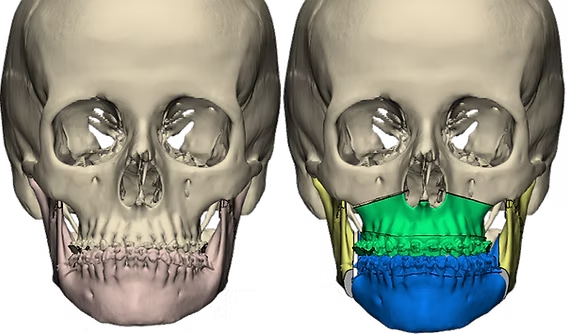
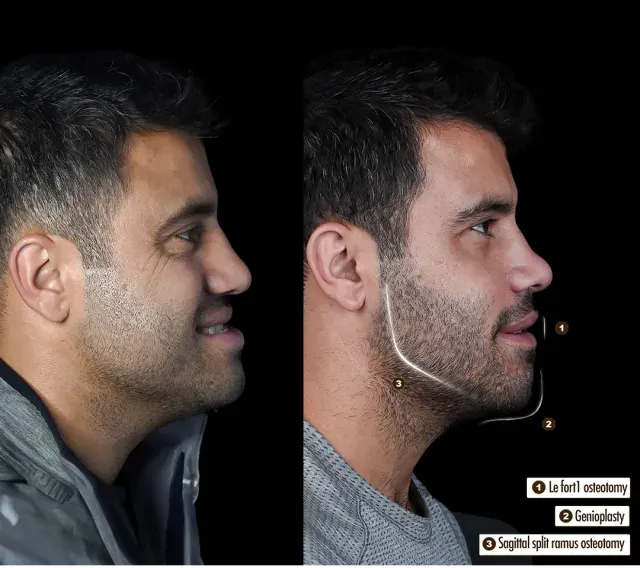
- Simulating the cuts. The planned osteotomies are drawn on the model: for example a Le Fort I cut for the upper jaw, a sagittal split for the lower jaw, or a sliding genioplasty for the chin.
- Moving the jaws. The bone segments are moved on screen to the planned bite and profile. The software shows how the bones meet, how symmetrical the result is and how the nerve canals relate to the cuts.
- Checking the face. The software estimates how the soft tissues of the face may follow the bone movement. At Hospitaprime, jaw movements are planned in AI-supported software.
- Refining the plan. Your preferences are discussed, and adjustments are made within safe medical and anatomical limits.
Double jaw surgery (bimax surgery), where both jaws are moved in one operation, benefits especially from this approach because the two jaws must fit each other and the face at the same time. Read more in our article on bimaxillary osteotomy.
How is the plan transferred to the operating room?
A plan on a screen only helps if it can be reproduced in surgery. This is done with tools made from the plan:
- Surgical splints (wafers): thin, 3D-printed bite plates that fit between your teeth. They hold the jaw in the planned position while it is fixed. Two-jaw surgery often uses an intermediate and a final splint.
- Cutting and positioning guides: printed guides that sit on the bone to show where to cut or where a segment should go, used when the movement is complex.
- Patient-specific plates: titanium plates designed for your anatomy and your planned movement, used instead of standard plates in selected cases.
Hospitaprime uses full-head CBCT, 3D facial scanning, intraoral scanning and in-house 3D printing, and offers both conventional fixation with standard titanium plates and custom surgery with patient-specific plates and surgical guides. Which one you need depends on your case. Our article on custom orthognathic surgery explains patient-specific plates in more detail.
What does the patient get from 3D planning?
For you, the benefits are practical:
- You see the plan before surgery. Dr. Pera shows you the 3D plan and your expected profile and explains what each movement does.
- Your questions are answered with your own anatomy. You can see why one jaw or both need to move, and how the chin fits in.
- A written plan. You know which procedures are planned, the expected hospital stay and the follow-up.
- A clear schedule. In Istanbul, records are taken on the day you arrive, the plan is explained on day two and surgery usually follows on day three.
What can 3D planning not do?
3D planning improves precision and communication, but it does not remove the limits of surgery:
- The face prediction is an estimate. Bone and teeth can be planned closely; how skin, lips and nose respond varies between people.
- The result takes time to appear. Major swelling improves over 2–3 weeks, and the final result shows over 3–6 months.
- Surgery still carries risks. These include numbness of the lower lip, chin or cheek, which is often temporary but can be lasting; bleeding; infection; changes in the bite that need orthodontic fine-tuning; jaw joint symptoms; and relapse, meaning the jaw moves back partly over time.
- Some decisions are made during surgery. The surgeon may adapt the plan if the bone or tissues differ from the scan.
Dr. Pera explains your individual risks in writing before you book. For corrections after earlier surgery, see revision jaw surgery.
How do you choose a jaw surgeon in Turkey?
Many people search for the best jaw surgeon in Turkey. A more useful question is whether a surgeon fits your case. Ask:
- Who plans and who operates? At Hospitaprime, Dr. Eren Pera plans your surgery in 3D himself and performs it.
- What training does the surgeon have? Jaw surgery is the field of oral and maxillofacial surgeons. Dr. Pera trained in dentistry at Hacettepe University and in oral and maxillofacial surgery at Ankara University.
- Will you see your plan before surgery? You should be able to see and discuss your 3D plan and expected profile.
- Where is the surgery done? Ask about general anaesthesia, the hospital stay and monitoring.
- Are the risks explained in writing? Before you book, not on the day of surgery.
- How is follow-up organised after you fly home? Including orthodontics and what happens if something needs correcting.
Frequently asked questions
How much does double jaw surgery cost in Turkey?
At Hospitaprime, orthognathic surgery, single or double jaw, costs $19,000–25,000, depending on whether one or both jaws are moved and how complex the case is. The price includes 3D planning with Dr. Pera, surgery under general anaesthesia, your hospital stay, transfers and a translator, and check-ups, and is confirmed in writing before you book flights.
Is 3D virtual planning used for every jaw surgery at Hospitaprime?
Yes. Every orthognathic case is planned in 3D with Dr. Pera before surgery.
Can I see what my face will look like after surgery?
You see the 3D plan and an estimate of your expected profile. It is a planning tool, not a guarantee, because soft tissues respond differently from person to person.
Do I need braces before 3D-planned surgery?
Not always. When medically appropriate, surgery is done first and clear aligners fine-tune the teeth afterwards. If the teeth are very crooked, orthodontic treatment comes first.
Are patient-specific plates always needed?
No. Standard titanium plates are suitable for many cases. Patient-specific plates and guides are used when the movement is complex.
How long is recovery after 3D-planned jaw surgery?
Recovery is the same as for other jaw surgery: light activity within the first weeks and full recovery over months; it varies from patient to patient. See our tips for after jaw surgery.
Ask Dr. Eren Pera
Considering jaw surgery? Send profile photos and, if you have one, your CBCT on WhatsApp (+90 541 855 89 95) or through the contact form. Dr. Eren Pera’s team replies with a first written opinion, and Dr. Pera explains your 3D plan with you in Istanbul before surgery.
More from our blog
 Which Country is Best for Double Jaw Surgery?If you’re looking for the best country for double jaw surgery, Turkey ranks #1 thanks to its perfect balance of high surgical expertise, internationally accredited hospitals and modern technology. Countries like South Korea, Germany, India, and Thailand Read more →
 What to Expect During Recovery from Double Jaw Surgery?Double jaw surgery is a procedure that corrects deformities in the upper and lower chin. It is called orthognathic surgery and requires a very delicate process. Since extensive procedures are performed on the mouth, teeth, and jaw areas, the recovery period seems like a long way. For this reason, itRead more →
 10 Things I Wish I Knew Before Having Double Jaw SurgeryDouble jaw surgery, a procedure that aims to improve both your smile and jaw function, requires meticulous preparation and a careful recovery process. To ensure a smooth and healthy recovery, it is crucial to revisit various aspects of your daily life, from personal care routines to sleep patterns aRead more →
Get a Free Written Consultation
Tell us a little about what you need. Dr. Eren Pera’s team replies with a written plan and price.