Monday to Friday8AM - 9PM
AddressPorta Vadi T2 Block No:103/1 Door: 3 1st Floor Kagithane/İstanbul
Dental implants serve as artificial tooth roots implanted into the jawbone, providing support for dentures. These artificial roots, which can replace missing teeth, are long-lasting, and patients can use them throughout their lives. With dental implant surgery, fixed or removable prostheses are placed on top of the implants. It helps patients regain their chewing function and aesthetic appearance.
Dental implants, titanium screws inserted into the jawbone, serve to replace missing teeth, providing a foundation for dental prostheses to be placed upon. One of the advantages of implant treatment is that it can be performed without damaging neighboring teeth. As a result, there’s no necessity to trim adjacent teeth during the dental implant placement procedure.
Implants act as tooth roots and gain functionality like natural teeth. You can easily perform activities such as eating, speaking, and laughing. Dental implant treatment replaces the original tooth roots with metal, screw-like posts. It replaces damaged or missing teeth with functional artificial teeth. Implants provide an alternative solution to ill-fitting dentures or bridges. Therefore, they can be preferred to traditional bridge methods.
This treatment method integrates tightly into the jawbone. Over time, they fuse with the surrounding tissues to form a solid structure. Dental implants are used not only to replace missing teeth but also as a more robust and natural alternative to dental bridges or removable dentures.
Implant is one of the leading methods of oral and dental treatments. It is preferred in cases of single, multiple and complete tooth loss. During this procedure, titanium artificial tooth roots are implanted into the jawbone.
Suitable candidates for implants are individuals who have completed bone development, are over 18 years of age, and do not have any serious health problems. So, who is a suitable candidate for dental implant placement?
If you have at least one of these conditions, dental implant surgery is suitable for you.
Place the dental implant and how long the treatment lasts may vary depending on the person’s condition. In some cases, the prosthesis phase can be started on the same day as the all-on-four implant application, while in other cases, additional surgical interventions may be required. This may extend the adaptation process, with an average waiting period of 3 months for implants to integrate with the bone in the upper jaw and 2 months in the lower jaw. Porcelain veneers are then applied.
However, in cases of thin or insufficient bone height, additional procedures may be required. In this case, the waiting period may extend up to 6 months.
No food or drink should be consumed a few hours before dental implant surgery. You should wear comfortable, loose, and not tight clothing to the surgery. You must avoid clothes with tight collars or buttons that may cause discomfort during the procedure. You should brush your teeth normally but you have to avoid using mouthwash or toothpaste with a strong flavor.
During the surgical procedure for a dental implant, your dentist cuts your gum to expose the bones. The holes for the metal body of the dental implant are drilled into the bones. The body is inserted deep into the bone to act as a tooth root.
When dental implant surgery is performed in one or more stages, you may experience some discomfort. These discomforts are as follows:
In case of swelling, discomfort, or any complications post dental implant surgery, it is crucial to promptly reach out to your surgeon for guidance and support.
Experts say that dental implants are the treatment method that can achieve results most similar to natural teeth. This treatment does not affect other teeth, preserves the jaw structure, and improves aesthetic appearance. In addition, implant teeth are strong and durable, fulfilling normal dental functions.
However, the treatment is more costly than other dental treatments. It requires a surgical procedure, and the healing process can be long. There are also cases where implants may be incompatible with other dental treatments. For certain patients, dental implants may not be appropriate, necessitating an assessment of jaw structure and bone density.
Dental implants are widely regarded as the treatment method that most closely mimics natural teeth. With the right care and hygiene, they provide longer-lasting results compared to other dental treatments. It does not affect other teeth and does not require interventions such as cutting or shaping neighboring teeth. It helps to preserve the jaw structure. It also prevents the jawbone from melting. They are strong and durable and fulfill normal dental functions.
In comparison to other treatment methods, dental implants are more expensive. The placement and healing process of dental implants may require a long healing period. It is not possible to say that dental implant treatment can be applied to everyone. In this case, the dentist will recommend other dental operations.
For patients with specific risk factors, dental implant surgery should be approached with caution. In individuals who are heavy smokers, implant treatment carries potential risks. Smoking encourages the accumulation of bacterial plaque in oral tissues, raising the risk of infection. Implant treatment is also risky in individuals with diabetes.
In uncontrolled diabetes, the tissue healing process is delayed. However, implants can be applied if blood sugar is under control. This treatment can pose risks for patients with heart disease either. These patients should be in contact with their cardiologists and dentists when considering implant treatment and should plan the treatment process carefully.
The kind of implant commonly preferred by dentists is the screw type. However, there are also different types used in implant treatment.
A waiting period of 1.5 to 2 months is required after tooth extraction. During this time, the implant is placed. Yet, under favorable circumstances, the implant can be inserted simultaneously with the tooth extraction. This procedure is called an immediate implant. The surgical procedure is similar to other options.
Instant implant is a method applied thanks to the developing technologies of dental surgery. In this method, dental implant surgery is performed in the same session for individuals with missing teeth. Prosthetic teeth are applied on the same day.
Pterygoid implants stand out by providing increased bone support to support the firm placement of the implants. Both types of zygomatic implants are specially designed for the treatment of missing teeth.
Titanium implants occupy an important position among implant materials. Nonetheless, a primary drawback of titanium implants is their reflective gray color. Therefore, various studies have been conducted to eliminate aesthetic concerns, and ceramic dental implants have emerged as an important alternative. Ceramic dental implants offer a great solution for teeth that are undergoing an increasing number of root canal treatments in patients.
Zirconia dental implants exhibit properties similar to titanium, which is considered compatible with tissues. They are more similar in color to natural teeth.
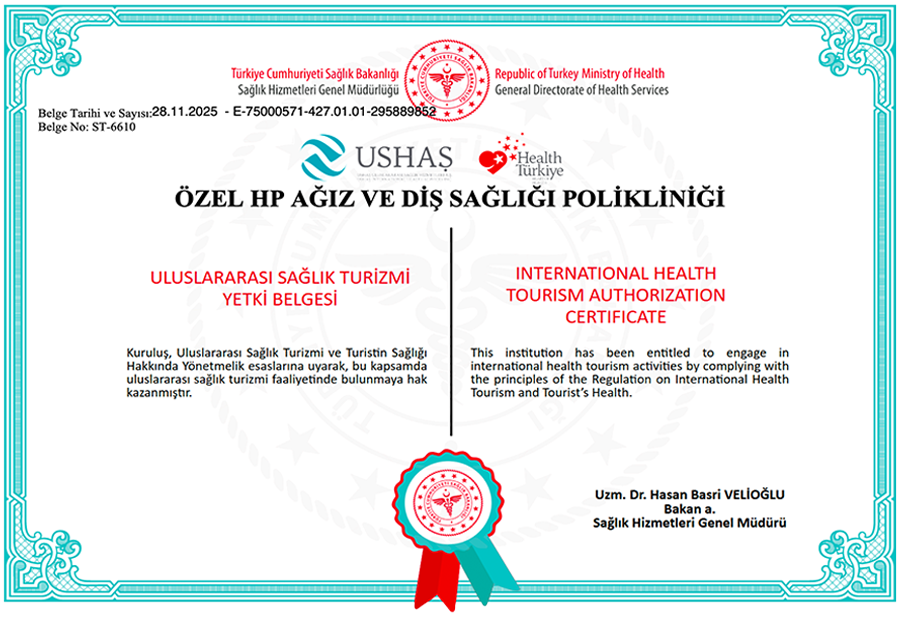
Dental implants Turkey are offered to patients with the best technology and high standards by specialized dentists. For example, priority is given to patients’ comfort and health. In addition, international standards and security protocols are strictly followed.
Our clinic is committed to providing a high level of service to all patients. With our success and competence in the field of dental implants, we provide all our patients with the appearance of their dreams and a healthy life.
Dental implant Turkey is a surgical intervention to repair missing teeth and preserve the natural tooth structure. Initially, an implant is placed into the jawbone, initiating the healing process. Then, prosthetic teeth are specially designed and attached to the implants. A smile that suits the patient’s needs is achieved.
Dental implant prices vary depending on the needs of the patients. Keep in touch with our clinic today to get the best prices with a quality service guarantee!
Turkey is known for offering some of the most affordable dental implant options in the world. Prices can start as low as ₤325 for a single tooth implant, while full mouth implant treatments typically range between ₤1,500 and ₤5,000. The final cost depends on factors like the complexity of the procedure, the type of implant used, and the reputation of the clinic.
Absolutely! Turkey has become a global hub for dental tourism, thanks to its combination of world-class facilities and affordable prices. Many Turkish clinics are equipped with cutting-edge technology, and the dentists are highly trained and experienced. This makes Turkey an excellent choice for anyone seeking quality dental implants without the high costs typically seen in other countries.
The procedure itself is relatively quick—usually about 1 to 2 hours for a single implant. However, the entire treatment process can span several months, especially if bone grafting or healing time is required before the final crown is placed. Your dentist will create a personalized timeline based on your individual needs to ensure optimal results.
Yes, dental implant procedures in Turkey are known for their safety and quality. Reputable clinics, especially in cities like Istanbul, adhere to international healthcare standards, ensuring that patients receive the highest quality care. By choosing a trusted clinic, you can feel confident that your procedure will be handled with expert precision and the latest in implant technology.
Turkey offers a unique blend of affordability, expertise, and convenience when it comes to dental implants. Not only are the costs significantly lower than in many Western countries, but patients also receive top-tier care. Many clinics provide comprehensive packages that include everything from airport transfers to accommodation, making the entire process stress-free. Plus, you get the added bonus of recovering in a beautiful country with rich history and culture!