Chin Wing Osteotomy: Reshaping the Chin and Jawline in One Surgery
 Hospitaprime6 min read
Medically reviewed by Dr. Eren Pera
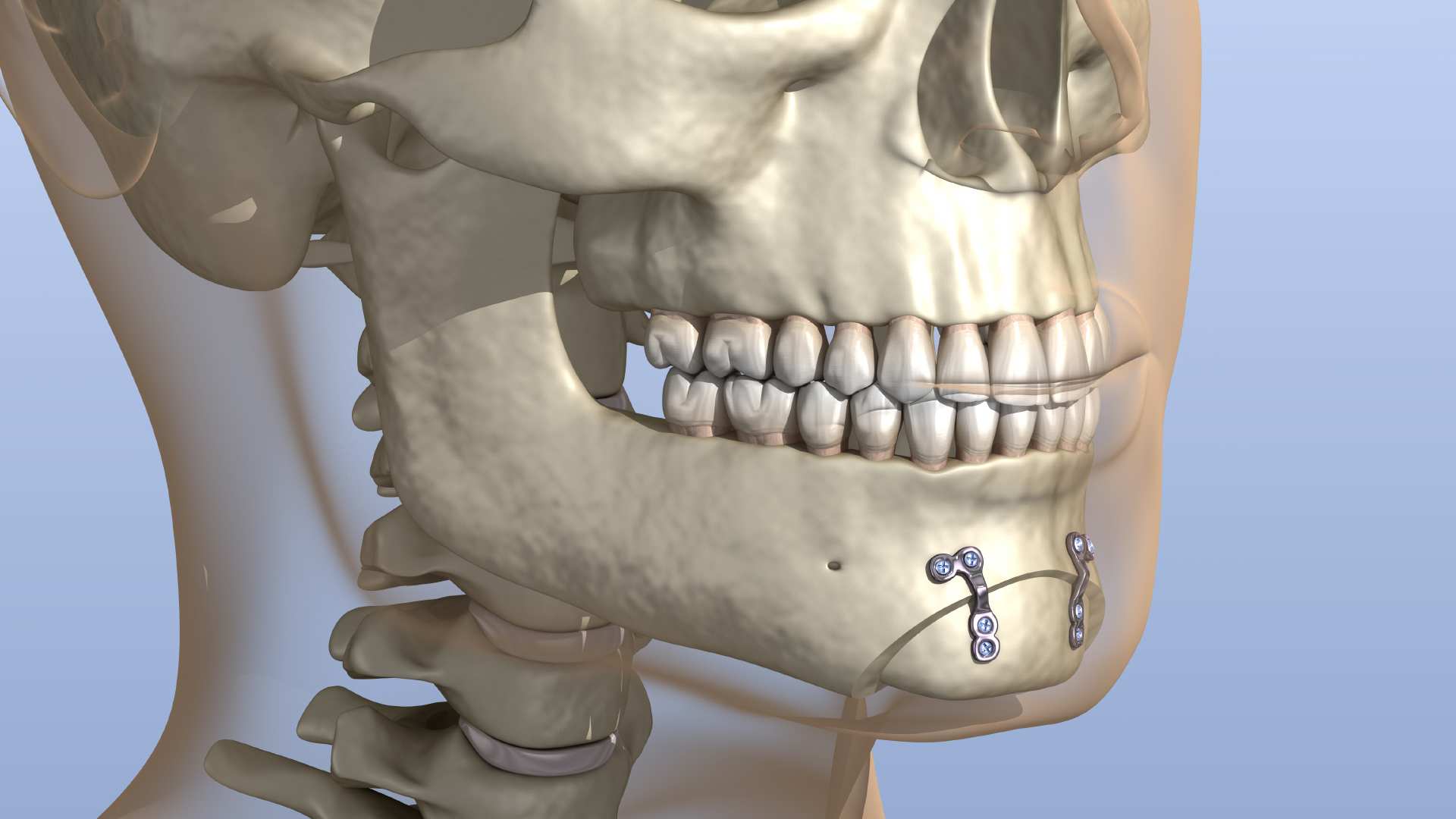
Chin wing osteotomy is a jaw surgery that moves the chin and the lower border of the jaw as one piece of bone. A classic genioplasty moves only the chin. A chin wing osteotomy extends the bone cut back along both sides of the lower jaw, towards the jaw angles. The whole lower border, shaped like a pair of wings, can then be moved forward, lowered, widened or straightened. The result is a stronger, more defined jawline made from your own bone, with no implant.
Key facts
- What moves: the chin and the lower border of the jaw on both sides, as one bone segment.
- Made from: your own bone, fixed with small titanium plates. No implant or filler.
- Incisions: inside the mouth. No visible scar on the face.
- Anaesthesia: general anaesthesia.
- Teeth and bite: not changed. The cut runs below the tooth roots and the nerve canal.
- Planned in 3D: from a CT/CBCT scan, so the new position is decided before surgery.
How it differs from a genioplasty
| Sliding genioplasty | Chin wing osteotomy | |
|---|---|---|
| Bone that moves | The tip of the chin only | The chin and the lower jaw border up to the angles |
| What it changes | Chin projection, height, midline | Chin and jawline: width, definition, the slope of the lower jaw |
| Best for | A small or set-back chin with a normal jawline | A weak or uneven jawline, a short or long lower face, asymmetry |
| Scope of surgery | Shorter, smaller | Longer, more extensive |
A chin implant or filler adds volume on top of the bone. A chin wing osteotomy moves the bone itself, so the change is permanent and there is no foreign material to shift or wear out. You can read more about the smaller options on our genioplasty, custom PEEK chin implant and Medpor chin implant pages.
Who it can help
Chin wing osteotomy is considered when the problem is not only the chin but the whole lower border of the jaw. For example:
- A weak or undefined jawline where the chin and the jaw border both lack projection.
- Facial asymmetry where one side of the lower jaw sits higher or further back than the other.
- A steep lower jaw (a high mandibular plane angle) that makes the lower face look long and the jawline sloping.
- A short lower face that needs more height.
- Congenital conditions affecting the lower jaw, such as hemifacial microsomia.
- Together with orthognathic surgery, when double jaw surgery corrects the bite and the jawline needs further shaping.
It is not the right choice for everyone. If your bite is out of line, the bite is usually corrected first with orthognathic (jaw) surgery, and the jawline is then planned around the new position. If only the chin is small, a genioplasty may be enough.
How the surgery is planned
Dr. Pera plans every chin wing osteotomy from your own scans, and you receive the plan in writing.

- Photos and a CBCT/CT scan of your face and jaws.
- 3D virtual planning. Dr. Pera moves the bone segment on a 3D model to decide how far it should go forward, down or sideways, and how the two sides should be balanced.
- Nerve mapping. The path of the nerve that gives feeling to the lower lip and chin is traced on the scan, so the cut can be planned below it.
- Surgical guides printed from the plan help transfer the planned position to the operating room.
You receive the plan and the price in writing before you travel.
The operation, step by step
- The surgery is done under general anaesthesia.
- The incision is made inside the mouth, behind the lower lip and along the lower jaw, so there is no scar on the face.
- The bone is cut from the chin back along both sides of the lower jaw, below the tooth roots and below the nerve canal.
- The freed segment is moved into the planned position and fixed with small titanium plates and screws.
- The incision is closed with dissolving stitches.
The operation usually takes a few hours, depending on the movement needed and whether it is combined with other jaw surgery.
Recovery
Recovery is individual and depends on the extent of surgery. As a general guide:
- First days: swelling and tightness around the jaw, controlled with medication and cold packs.
- First two weeks: swelling goes down day by day. A soft diet is needed, and good oral hygiene protects the incisions.
- Around 6 weeks: the bone heals in its new position. Normal chewing is usually resumed gradually from this point, as advised by your surgeon.
- 3 to 6 months: the last swelling settles and the final jawline is seen.
International patients usually stay in Istanbul for about a week after surgery for check-ups before flying home. We stay in touch afterwards on a set follow-up schedule.
Risks to know about
Like any jaw surgery, chin wing osteotomy has risks. Dr. Pera will go through them with you before surgery.
- Numbness of the lower lip and chin. The nerve that gives feeling to this area runs close to the bone cut. Temporary numbness is common and usually improves over weeks to months. Permanent changes in sensation are possible.
- Swelling and bruising, which settle over the first weeks.
- Infection, reduced with antibiotics and oral hygiene.
- Asymmetry or under-/over-correction, which careful 3D planning aims to prevent.
- Plate-related issues, such as feeling a plate under the skin. Plates can be removed later if they cause problems.
- Fracture of the lower jaw is rare but possible, because the bone cut runs along a long section of the jaw.
Frequently asked questions
Is chin wing osteotomy the same as genioplasty?
No. Genioplasty moves only the chin. Chin wing osteotomy moves the chin and the lower border of the jaw on both sides as one piece, so it reshapes the whole jawline.
Will I have a scar?
No visible scar. The incisions are inside the mouth.
Will my bite or teeth change?
No. The bone cut runs below the tooth roots, so the teeth and the bite stay as they are. If the bite needs correcting, that is done with orthognathic surgery.
Is the result permanent?
Yes. The change is made with your own bone, which heals in its new position. There is no implant to move or wear out.
Can it be combined with other surgery?
Yes. It is often planned together with double jaw surgery or other facial procedures in the same operation, when this is safe and suits your plan.
How long do I need to stay in Istanbul?
Usually about one week after surgery for check-ups. Your exact plan is given in writing before you travel.
How much does chin wing osteotomy cost in Turkey?
The price depends on the movement needed and whether other procedures are combined. Send your photos and scans, and you will receive a written plan and price.
Ask Dr. Eren Pera
Dr. Eren Pera is an oral and maxillofacial surgeon and the founder of Hospitaprime in Istanbul, Turkey's first certified ZAGA Center. He plans every jaw surgery in 3D from your own scans.

Send your photos, and a CBCT or X-ray if you have one, on WhatsApp or through the form. You will receive a written plan and price.
This article is for general information and does not replace a consultation. The suitability, plan and risks of surgery are assessed individually.
More from our blog
 Facial and Jaw Implants: Chin, Jawline, Cheekbone & Custom PEEKFacial and jaw implants are surgical devices designed to enhance or reconstruct facial contours by augmenting bone structures in the chin, jawline, cheekbones, and midface regions. These biocompatible implants made from materials like silicone, medpor, or custom PEEK (polyetheretherketone) are placeRead more →
 What is Mandibular Reshaping? How Is Mentoplasty Surgery Done?Have you ever looked in the mirror and wished your jawline was a little more defined, a bit softer, or perhaps more symmetrical? The jawline plays a crucial role in framing your face, influencing your overall facial balance and aesthetic appeal. For many, a well-defined jawline signifies strength, yRead more →
 Subspinal Le Fort I Osteotomy: Comprehensive Guide to Maxillary AdvancementThe Subspinal Le Fort I Osteotomy is a highly specialized orthognathic surgical technique used to correct complex midface and maxillary deficiency by carefully repositioning the upper jaw. It differs from the standard Le Fort I procedure primarily by preserving the nasal floor and lower turbinates, Read more →
Get a Free Written Consultation
Tell us a little about what you need. Dr. Eren Pera’s team replies with a written plan and price.